Readings Newsletter
Become a Readings Member to make your shopping experience even easier.
Sign in or sign up for free!
You’re not far away from qualifying for FREE standard shipping within Australia
You’ve qualified for FREE standard shipping within Australia
The cart is loading…


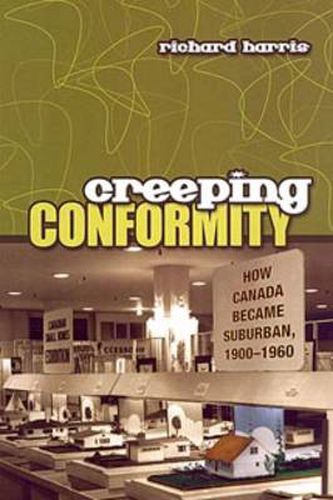
Creeping Conformity, the first history of suburbanization in Canada, provides a geographical perspective - both physical and social - on Canada’s suburban past. Shaped by internal and external migration, decentralization of employment, and increased use of the streetcar and then the automobile, the rise of the suburb held great social promise, reflecting the aspirations of Canadian families for more domestic space and home ownership.
After 1945 however, the suburbs became stereotyped as generic, physically standardized, and socially conformist places. By 1960, they had grown further away - physically and culturally - from their respective parent cities, and brought unanticipated social and environmental consequences. Government intervention also played a key role, encouraging mortgage indebtedness, amortization, and building and subdivision regulations to become the suburban norm. Suburban homes became less affordable and more standardized, and for the first time, Canadian commentators began to speak disdainfully of ‘the suburbs,’ or simply ‘suburbia.’ Creeping Conformity traces how these perceptions emerged to reflect a new suburban reality.
$9.00 standard shipping within Australia
FREE standard shipping within Australia for orders over $100.00
Express & International shipping calculated at checkout
Stock availability can be subject to change without notice. We recommend calling the shop or contacting our online team to check availability of low stock items. Please see our Shopping Online page for more details.
Creeping Conformity, the first history of suburbanization in Canada, provides a geographical perspective - both physical and social - on Canada’s suburban past. Shaped by internal and external migration, decentralization of employment, and increased use of the streetcar and then the automobile, the rise of the suburb held great social promise, reflecting the aspirations of Canadian families for more domestic space and home ownership.
After 1945 however, the suburbs became stereotyped as generic, physically standardized, and socially conformist places. By 1960, they had grown further away - physically and culturally - from their respective parent cities, and brought unanticipated social and environmental consequences. Government intervention also played a key role, encouraging mortgage indebtedness, amortization, and building and subdivision regulations to become the suburban norm. Suburban homes became less affordable and more standardized, and for the first time, Canadian commentators began to speak disdainfully of ‘the suburbs,’ or simply ‘suburbia.’ Creeping Conformity traces how these perceptions emerged to reflect a new suburban reality.
Search our extensive online catalogue.
