Readings Newsletter
Become a Readings Member to make your shopping experience even easier.
Sign in or sign up for free!
You’re not far away from qualifying for FREE standard shipping within Australia
You’ve qualified for FREE standard shipping within Australia
The cart is loading…


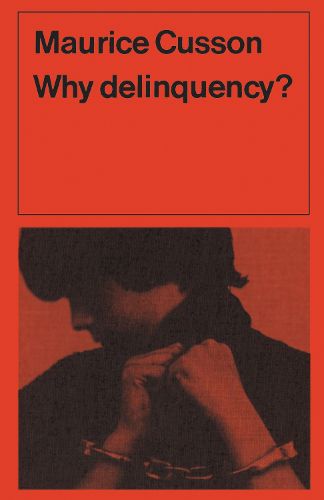
In this lucid, original, and provocative study, Professor Cusson advances a theory of delinquent behaviour that is both disarming and convincing. Delinquent behaviour, he reminds us, is fairly widespread among young people of all classes and backgrounds - it is not it is not, as some would like to believe, exclusively a lower-class phenomenon. Most adolescents, at one time or another, commit acts that are violations of the law. Why do they do so?
Delinquent activity affords more advantages than is generally supposed. It permits adolescents to satisfy numerous desires, to resolve very real problems, to live intensely, and to enjoy themselves thoroughly. It is one means of obtaining what most of us are looking for: excitement, possessions, power, and the defence of essentail self-interests.
However, only a minority of adolescents, mainly restless youngsters concerned with the present, become deeply involved in crime. They do so because this seems to be the solution most readily available to them. Having problems at school and in the labour market, they find that doors normally open to those who enter adult life are closed to them. They associate with friends who initiate them in criminal techniques and become their allies in delinquent ventures. This association opens the way to illegal activities that will enable them to achieve their goals.
Translated and adapted from his book Delinquants pourquoi?, Cusson’s study is enlivened by interesting and appropriate examples drawn from a large European and North American literature. Moreover, it ranges from philosophy to the behavioural and then to the biological sciences with ease and fluidity. It will stimulate the thinking of student and general reader alike.
$9.00 standard shipping within Australia
FREE standard shipping within Australia for orders over $100.00
Express & International shipping calculated at checkout
Stock availability can be subject to change without notice. We recommend calling the shop or contacting our online team to check availability of low stock items. Please see our Shopping Online page for more details.
In this lucid, original, and provocative study, Professor Cusson advances a theory of delinquent behaviour that is both disarming and convincing. Delinquent behaviour, he reminds us, is fairly widespread among young people of all classes and backgrounds - it is not it is not, as some would like to believe, exclusively a lower-class phenomenon. Most adolescents, at one time or another, commit acts that are violations of the law. Why do they do so?
Delinquent activity affords more advantages than is generally supposed. It permits adolescents to satisfy numerous desires, to resolve very real problems, to live intensely, and to enjoy themselves thoroughly. It is one means of obtaining what most of us are looking for: excitement, possessions, power, and the defence of essentail self-interests.
However, only a minority of adolescents, mainly restless youngsters concerned with the present, become deeply involved in crime. They do so because this seems to be the solution most readily available to them. Having problems at school and in the labour market, they find that doors normally open to those who enter adult life are closed to them. They associate with friends who initiate them in criminal techniques and become their allies in delinquent ventures. This association opens the way to illegal activities that will enable them to achieve their goals.
Translated and adapted from his book Delinquants pourquoi?, Cusson’s study is enlivened by interesting and appropriate examples drawn from a large European and North American literature. Moreover, it ranges from philosophy to the behavioural and then to the biological sciences with ease and fluidity. It will stimulate the thinking of student and general reader alike.
Search our extensive online catalogue.
