Readings Newsletter
Become a Readings Member to make your shopping experience even easier.
Sign in or sign up for free!
You’re not far away from qualifying for FREE standard shipping within Australia
You’ve qualified for FREE standard shipping within Australia
The cart is loading…


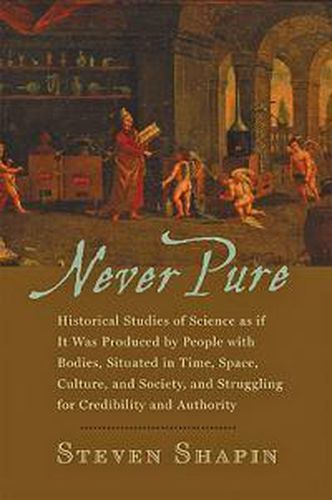
Steven Shapin argues that science, for all its immense authority and power, is and always has been a human endeavor, subject to human capacities and limits. Put simply, science has never been pure. To be human is to err, and we understand science better when we recognize it as the laborious achievement of fallible, imperfect, and historically situated human beings. Shapin’s essays collected here include reflections on the historical relationships between science and common sense, between science and modernity, and between science and the moral order. They explore the relevance of physical and social settings in the making of scientific knowledge, the methods appropriate to understanding science historically, dietetics as a compelling site for historical inquiry, the identity of those who have made scientific knowledge, and the means by which science has acquired credibility and authority. This wide-ranging and intensely interdisciplinary collection by one of the most distinguished historians and sociologists of science represents some of the leading edges of change in the scholarly understanding of science over the past several decades.
$9.00 standard shipping within Australia
FREE standard shipping within Australia for orders over $100.00
Express & International shipping calculated at checkout
Stock availability can be subject to change without notice. We recommend calling the shop or contacting our online team to check availability of low stock items. Please see our Shopping Online page for more details.
Steven Shapin argues that science, for all its immense authority and power, is and always has been a human endeavor, subject to human capacities and limits. Put simply, science has never been pure. To be human is to err, and we understand science better when we recognize it as the laborious achievement of fallible, imperfect, and historically situated human beings. Shapin’s essays collected here include reflections on the historical relationships between science and common sense, between science and modernity, and between science and the moral order. They explore the relevance of physical and social settings in the making of scientific knowledge, the methods appropriate to understanding science historically, dietetics as a compelling site for historical inquiry, the identity of those who have made scientific knowledge, and the means by which science has acquired credibility and authority. This wide-ranging and intensely interdisciplinary collection by one of the most distinguished historians and sociologists of science represents some of the leading edges of change in the scholarly understanding of science over the past several decades.
Search our extensive online catalogue.
