Readings Newsletter
Become a Readings Member to make your shopping experience even easier.
Sign in or sign up for free!
You’re not far away from qualifying for FREE standard shipping within Australia
You’ve qualified for FREE standard shipping within Australia
The cart is loading…


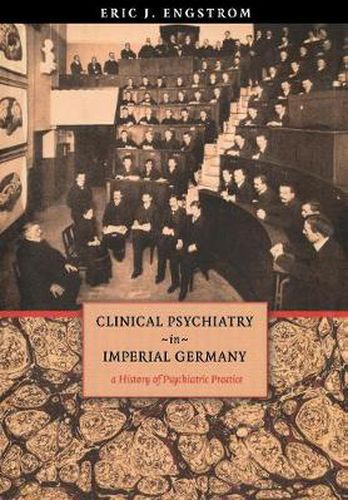
The psychiatric profession in Germany changed radically from the mid-19th century to the beginning of World War I. In this text, Eric J. Engstrom investigates the history of university psychiatric clinics in Imperial Germany from 1867 to 1914, emphasizing the clinical practices and professional debates surrounding the development of these institutions and their impact on the course of German psychiatry. The rise of university psychiatric clinics reflects, Engstrom tells us, a shift not only in asylum culture, but also in the ways in which social, political and economic issues deeply influenced the practice of psychiatry. Equally convincing is Engstrom’s argument that psychiatrists were responding to and working to shape the rapidly changing perceptions of madness in Imperial Germany. In a series of case studies, the book focuses on a number of important clinical spaces such as the laboratory, the ward, the lecture hall and the polyclinic. Engstrom argues that within these spaces clinics developed their own disciplinary economies and that their emergence was inseparably intertwined with jurisdictional contests between competing scientific, administrative, didactic and socio-political agendas.
$9.00 standard shipping within Australia
FREE standard shipping within Australia for orders over $100.00
Express & International shipping calculated at checkout
Stock availability can be subject to change without notice. We recommend calling the shop or contacting our online team to check availability of low stock items. Please see our Shopping Online page for more details.
The psychiatric profession in Germany changed radically from the mid-19th century to the beginning of World War I. In this text, Eric J. Engstrom investigates the history of university psychiatric clinics in Imperial Germany from 1867 to 1914, emphasizing the clinical practices and professional debates surrounding the development of these institutions and their impact on the course of German psychiatry. The rise of university psychiatric clinics reflects, Engstrom tells us, a shift not only in asylum culture, but also in the ways in which social, political and economic issues deeply influenced the practice of psychiatry. Equally convincing is Engstrom’s argument that psychiatrists were responding to and working to shape the rapidly changing perceptions of madness in Imperial Germany. In a series of case studies, the book focuses on a number of important clinical spaces such as the laboratory, the ward, the lecture hall and the polyclinic. Engstrom argues that within these spaces clinics developed their own disciplinary economies and that their emergence was inseparably intertwined with jurisdictional contests between competing scientific, administrative, didactic and socio-political agendas.
Search our extensive online catalogue.
