Readings Newsletter
Become a Readings Member to make your shopping experience even easier.
Sign in or sign up for free!
You’re not far away from qualifying for FREE standard shipping within Australia
You’ve qualified for FREE standard shipping within Australia
The cart is loading…


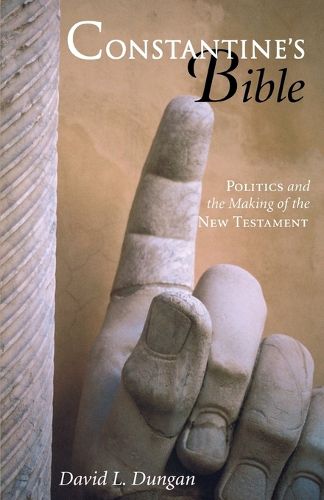
Most college and seminary courses on the New Testament include discussions of the process that gave shape to the New Testament. Now David Dungan re-examines the primary source for this history, the Ecclesiastical History of the fourth-century Bishop Eusebius of Caesarea, in the light of Hellenistic political thought. He reaches startling new conclusions: that we usually use the term canon incorrectly; that the legal imposition of a canon or rule upon scripture was a fourth- and fifth-century phenomenon enforced with the power of the Roman imperial government; that the forces shaping the New Testament canon are much earlier than the second-century crisis occasioned by Marcion, and that they are political forces. Dungan discusses how the scripture selection process worked, book-by-book, as he examines the criteria used-and not used-to make these decisions. Finally he describes the consequences of the emperor Constantine’s tremendous achievement in transforming orthodox, Catholic Christianity into imperial Christianity.
$9.00 standard shipping within Australia
FREE standard shipping within Australia for orders over $100.00
Express & International shipping calculated at checkout
Stock availability can be subject to change without notice. We recommend calling the shop or contacting our online team to check availability of low stock items. Please see our Shopping Online page for more details.
Most college and seminary courses on the New Testament include discussions of the process that gave shape to the New Testament. Now David Dungan re-examines the primary source for this history, the Ecclesiastical History of the fourth-century Bishop Eusebius of Caesarea, in the light of Hellenistic political thought. He reaches startling new conclusions: that we usually use the term canon incorrectly; that the legal imposition of a canon or rule upon scripture was a fourth- and fifth-century phenomenon enforced with the power of the Roman imperial government; that the forces shaping the New Testament canon are much earlier than the second-century crisis occasioned by Marcion, and that they are political forces. Dungan discusses how the scripture selection process worked, book-by-book, as he examines the criteria used-and not used-to make these decisions. Finally he describes the consequences of the emperor Constantine’s tremendous achievement in transforming orthodox, Catholic Christianity into imperial Christianity.
Search our extensive online catalogue.
