Readings Newsletter
Become a Readings Member to make your shopping experience even easier.
Sign in or sign up for free!
You’re not far away from qualifying for FREE standard shipping within Australia
You’ve qualified for FREE standard shipping within Australia
The cart is loading…


This title is printed to order. This book may have been self-published. If so, we cannot guarantee the quality of the content. In the main most books will have gone through the editing process however some may not. We therefore suggest that you be aware of this before ordering this book. If in doubt check either the author or publisher’s details as we are unable to accept any returns unless they are faulty. Please contact us if you have any questions.
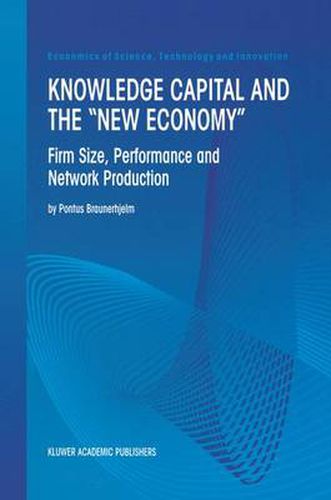
According to its proponents, the new economy is associated with sustainable growth, increased demand for labour and zero inflation. On the micro-level, this avenue into the future is propelled by knowledge capital, flexibility and new ways of organizing production, such as clusters and networks. Progress in information technology, together with massive deregulation on the national and the international levels, have been credited with setting this development into motion. The concept of the new economy has been rapidly embraced by politicians, as it seems to offer a way out of the traditional trade-off between unemployment and wage inflation. However, empirical evidence regarding the microeconomic mechanisms of the new economy is scarce. This work intends to narrow this gap by empirically analyzing the composition of knowledge capital and how knowledge capital is distributed across firms of different size. Moreover, the impact of knowledge capital on firms’ profitability and international competitiveness is also examined. Finally, we compare cluster dynamics and the institutional set-up in Europe and the US, with the purpose of identifying regulations that seem to hinder a conducive environment for expanding and dynamic European clusters.
$9.00 standard shipping within Australia
FREE standard shipping within Australia for orders over $100.00
Express & International shipping calculated at checkout
Stock availability can be subject to change without notice. We recommend calling the shop or contacting our online team to check availability of low stock items. Please see our Shopping Online page for more details.
This title is printed to order. This book may have been self-published. If so, we cannot guarantee the quality of the content. In the main most books will have gone through the editing process however some may not. We therefore suggest that you be aware of this before ordering this book. If in doubt check either the author or publisher’s details as we are unable to accept any returns unless they are faulty. Please contact us if you have any questions.
According to its proponents, the new economy is associated with sustainable growth, increased demand for labour and zero inflation. On the micro-level, this avenue into the future is propelled by knowledge capital, flexibility and new ways of organizing production, such as clusters and networks. Progress in information technology, together with massive deregulation on the national and the international levels, have been credited with setting this development into motion. The concept of the new economy has been rapidly embraced by politicians, as it seems to offer a way out of the traditional trade-off between unemployment and wage inflation. However, empirical evidence regarding the microeconomic mechanisms of the new economy is scarce. This work intends to narrow this gap by empirically analyzing the composition of knowledge capital and how knowledge capital is distributed across firms of different size. Moreover, the impact of knowledge capital on firms’ profitability and international competitiveness is also examined. Finally, we compare cluster dynamics and the institutional set-up in Europe and the US, with the purpose of identifying regulations that seem to hinder a conducive environment for expanding and dynamic European clusters.
Search our extensive online catalogue.
