Readings Newsletter
Become a Readings Member to make your shopping experience even easier.
Sign in or sign up for free!
You’re not far away from qualifying for FREE standard shipping within Australia
You’ve qualified for FREE standard shipping within Australia
The cart is loading…


This title is printed to order. This book may have been self-published. If so, we cannot guarantee the quality of the content. In the main most books will have gone through the editing process however some may not. We therefore suggest that you be aware of this before ordering this book. If in doubt check either the author or publisher’s details as we are unable to accept any returns unless they are faulty. Please contact us if you have any questions.
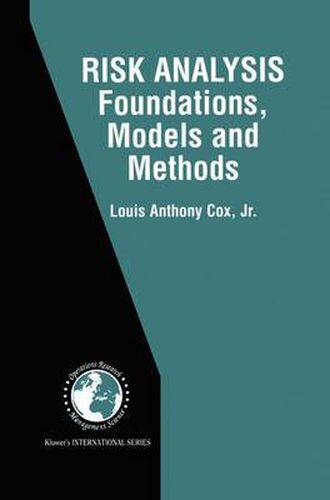
This title addresses the questions of What is health risk analysis? and How can its potentialities be developed to be most valuable to public health decision-makers and other health risk managers? Risk analysis provides methods and principles for answering these questions. It is divided into methods for assessing, communicating, and managing health risks. Risk assessment quantitatively estimates the health risks to individuals and to groups from hazardous exposures and from the decisions or activities that create them. It applies specialized models and methods to quantify likely exposures and their resulting health risks. Its goal is to produce information to improve decisions. It does this by relating alternative decisions to their probable consequences and by identifying those decisions that make preferred outcomes more likely. Health risk assessment draws on explicit engineering, biomathematical, and statistical consequence models to describe or simulate the causal relations between actions and their probable effects on health. Risk communication characterizes and presents information about health risks and uncertainties to decision-makers and stakeholders. Risk management applies principles for choosing among alternative decision alternatives or actions that affect exposure, health risks, or their consequences.
$9.00 standard shipping within Australia
FREE standard shipping within Australia for orders over $100.00
Express & International shipping calculated at checkout
Stock availability can be subject to change without notice. We recommend calling the shop or contacting our online team to check availability of low stock items. Please see our Shopping Online page for more details.
This title is printed to order. This book may have been self-published. If so, we cannot guarantee the quality of the content. In the main most books will have gone through the editing process however some may not. We therefore suggest that you be aware of this before ordering this book. If in doubt check either the author or publisher’s details as we are unable to accept any returns unless they are faulty. Please contact us if you have any questions.
This title addresses the questions of What is health risk analysis? and How can its potentialities be developed to be most valuable to public health decision-makers and other health risk managers? Risk analysis provides methods and principles for answering these questions. It is divided into methods for assessing, communicating, and managing health risks. Risk assessment quantitatively estimates the health risks to individuals and to groups from hazardous exposures and from the decisions or activities that create them. It applies specialized models and methods to quantify likely exposures and their resulting health risks. Its goal is to produce information to improve decisions. It does this by relating alternative decisions to their probable consequences and by identifying those decisions that make preferred outcomes more likely. Health risk assessment draws on explicit engineering, biomathematical, and statistical consequence models to describe or simulate the causal relations between actions and their probable effects on health. Risk communication characterizes and presents information about health risks and uncertainties to decision-makers and stakeholders. Risk management applies principles for choosing among alternative decision alternatives or actions that affect exposure, health risks, or their consequences.
Search our extensive online catalogue.
