Readings Newsletter
Become a Readings Member to make your shopping experience even easier.
Sign in or sign up for free!
You’re not far away from qualifying for FREE standard shipping within Australia
You’ve qualified for FREE standard shipping within Australia
The cart is loading…


This title is printed to order. This book may have been self-published. If so, we cannot guarantee the quality of the content. In the main most books will have gone through the editing process however some may not. We therefore suggest that you be aware of this before ordering this book. If in doubt check either the author or publisher’s details as we are unable to accept any returns unless they are faulty. Please contact us if you have any questions.
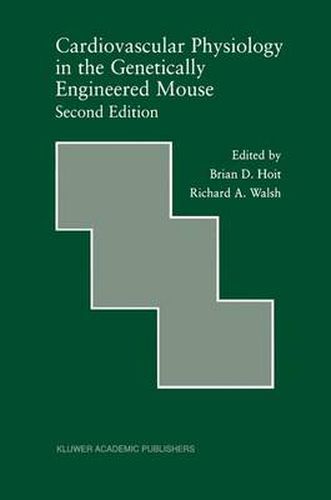
The advances in molecular biology and genetics coupled with the progress in instrumentation and surgical techniques have produced a voluminous and often bewildering quantity of data. The primary objective of this second edition is to critically interpret the literature and to provide a framework for the enormous amount of information in this burgeoning field. As in the first edition, the monograph serves as a practical guide for the investigator interested in the functional methods used to characterize the murine cardiovascular phenotype. The monograph is organized into three parts. The first deals with principles of transgenesis and homologous recombination. The second part, which again is the largest, discusses the various techniques used to assess the cardiovascular mechanical, metabolic, and electrophysiologic phenotype. This section is organized in a hierarchical manner - i.e. from isolated myocyte to isolated heart to the intact, anesthetized and conscious mouse. The third part examines techniques used to evaluate murine smooth muscle function, genetic mouse models of hypertrophy and heart failure, and the methods to assess the cardiovascular phenotype in the developing mouse embryo. In addition, newer methods that push the envelope , such as magnetic resonance imaging (MRI), positron emission tomography (PET), ultrasound biomicroscopy (UBM), and computed tomography (microCT) are discussed. Expanded and updated, each chapter is richly enhanced with original tables and figures, and in many cases, extensively rewritten when compared with the first edition. An essential and enduring goal of this second edition is to continue to facilitate interactions between the basic science disciplines and help bridge the gap between molecular biology and physiology.
$9.00 standard shipping within Australia
FREE standard shipping within Australia for orders over $100.00
Express & International shipping calculated at checkout
Stock availability can be subject to change without notice. We recommend calling the shop or contacting our online team to check availability of low stock items. Please see our Shopping Online page for more details.
This title is printed to order. This book may have been self-published. If so, we cannot guarantee the quality of the content. In the main most books will have gone through the editing process however some may not. We therefore suggest that you be aware of this before ordering this book. If in doubt check either the author or publisher’s details as we are unable to accept any returns unless they are faulty. Please contact us if you have any questions.
The advances in molecular biology and genetics coupled with the progress in instrumentation and surgical techniques have produced a voluminous and often bewildering quantity of data. The primary objective of this second edition is to critically interpret the literature and to provide a framework for the enormous amount of information in this burgeoning field. As in the first edition, the monograph serves as a practical guide for the investigator interested in the functional methods used to characterize the murine cardiovascular phenotype. The monograph is organized into three parts. The first deals with principles of transgenesis and homologous recombination. The second part, which again is the largest, discusses the various techniques used to assess the cardiovascular mechanical, metabolic, and electrophysiologic phenotype. This section is organized in a hierarchical manner - i.e. from isolated myocyte to isolated heart to the intact, anesthetized and conscious mouse. The third part examines techniques used to evaluate murine smooth muscle function, genetic mouse models of hypertrophy and heart failure, and the methods to assess the cardiovascular phenotype in the developing mouse embryo. In addition, newer methods that push the envelope , such as magnetic resonance imaging (MRI), positron emission tomography (PET), ultrasound biomicroscopy (UBM), and computed tomography (microCT) are discussed. Expanded and updated, each chapter is richly enhanced with original tables and figures, and in many cases, extensively rewritten when compared with the first edition. An essential and enduring goal of this second edition is to continue to facilitate interactions between the basic science disciplines and help bridge the gap between molecular biology and physiology.
Search our extensive online catalogue.
