Readings Newsletter
Become a Readings Member to make your shopping experience even easier.
Sign in or sign up for free!
You’re not far away from qualifying for FREE standard shipping within Australia
You’ve qualified for FREE standard shipping within Australia
The cart is loading…


This title is printed to order. This book may have been self-published. If so, we cannot guarantee the quality of the content. In the main most books will have gone through the editing process however some may not. We therefore suggest that you be aware of this before ordering this book. If in doubt check either the author or publisher’s details as we are unable to accept any returns unless they are faulty. Please contact us if you have any questions.
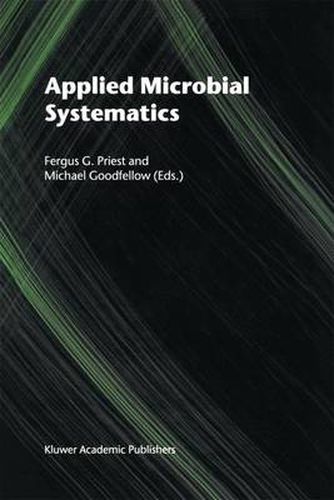
Modern approaches to microbial classification and identification, particularly those based on nucleic acid analysis, have raised the awareness and interest of microbiologists in systematics since the 1990s. The extended scope of the subject has revolutionized microbial ecology with the demonstration of uncultivable micro-organisms as a major component of the biosphere and evolution, with the ribosomal RNA phylogenetic tree as the basis of current classifications. However, advances in microbial systematics have also had enormous impact on other, diverse aspects of microbiology such as animal pathogenicity, plant-microbe interactions and relationships with food. In this book, we survey and discuss in depth the contribution of modern taxonomic approaches to our understanding of the microbiology of these various systems. This work provides an insight into the application and value of modern systematics in diverse branches of microbiology. It should be of value to microbiologists at both research and technical levels who need to appreciate the range of organisms with which they work and the diversity within them. It should also be of value to teachers and students of microbiology courses who want to understand how systematics can enhance microbiology beyond the routine of classification, nomenclature, and identification.
$9.00 standard shipping within Australia
FREE standard shipping within Australia for orders over $100.00
Express & International shipping calculated at checkout
Stock availability can be subject to change without notice. We recommend calling the shop or contacting our online team to check availability of low stock items. Please see our Shopping Online page for more details.
This title is printed to order. This book may have been self-published. If so, we cannot guarantee the quality of the content. In the main most books will have gone through the editing process however some may not. We therefore suggest that you be aware of this before ordering this book. If in doubt check either the author or publisher’s details as we are unable to accept any returns unless they are faulty. Please contact us if you have any questions.
Modern approaches to microbial classification and identification, particularly those based on nucleic acid analysis, have raised the awareness and interest of microbiologists in systematics since the 1990s. The extended scope of the subject has revolutionized microbial ecology with the demonstration of uncultivable micro-organisms as a major component of the biosphere and evolution, with the ribosomal RNA phylogenetic tree as the basis of current classifications. However, advances in microbial systematics have also had enormous impact on other, diverse aspects of microbiology such as animal pathogenicity, plant-microbe interactions and relationships with food. In this book, we survey and discuss in depth the contribution of modern taxonomic approaches to our understanding of the microbiology of these various systems. This work provides an insight into the application and value of modern systematics in diverse branches of microbiology. It should be of value to microbiologists at both research and technical levels who need to appreciate the range of organisms with which they work and the diversity within them. It should also be of value to teachers and students of microbiology courses who want to understand how systematics can enhance microbiology beyond the routine of classification, nomenclature, and identification.
Search our extensive online catalogue.
