Readings Newsletter
Become a Readings Member to make your shopping experience even easier.
Sign in or sign up for free!
You’re not far away from qualifying for FREE standard shipping within Australia
You’ve qualified for FREE standard shipping within Australia
The cart is loading…


This title is printed to order. This book may have been self-published. If so, we cannot guarantee the quality of the content. In the main most books will have gone through the editing process however some may not. We therefore suggest that you be aware of this before ordering this book. If in doubt check either the author or publisher’s details as we are unable to accept any returns unless they are faulty. Please contact us if you have any questions.
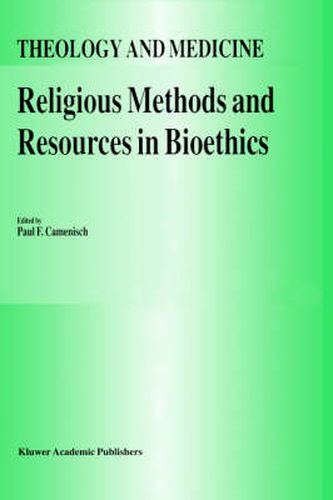
What does religion or the religious traditions have to contribute to the discussion and resolution of contemporary bioethical issues? Each of the 15 essays written for this volume addresses this question by treating a limited area within the volume’s title area, Religious Methods and Resources in Bioethics . The essays keep in touch with the very concrete and specific nature of bioethics by illustrating their points with selected bioethical problems or cases. Some discuss the basic resources, methods and/or presuppositions which characterize the approach to bioethical issues of an entire tradition or a significant element thereof. Traditions represented include Hinduism, Buddhism, Taoism, Islam and Judaism. Other authors, while working primarily within their own traditions, most frequently in this section in Christian thought and practice, address methodological issues which arise in a number of traditions. Such matters include casuistry, feminism, principalism and its rivals, virtue ethics, and the issue of ethics’ impartial rationality. A final group addresses methodological questions within a given tradition. These include the use of scripture and of non-canonical authoritative documents, and the role of religious practices in Christian bioethical thinking, and the use of responsa in the Jewish tradition. This volume should be of interest to any persons, beyond beginning undergraduate levels, concerned about religious contributions to bioethical issues.
$9.00 standard shipping within Australia
FREE standard shipping within Australia for orders over $100.00
Express & International shipping calculated at checkout
Stock availability can be subject to change without notice. We recommend calling the shop or contacting our online team to check availability of low stock items. Please see our Shopping Online page for more details.
This title is printed to order. This book may have been self-published. If so, we cannot guarantee the quality of the content. In the main most books will have gone through the editing process however some may not. We therefore suggest that you be aware of this before ordering this book. If in doubt check either the author or publisher’s details as we are unable to accept any returns unless they are faulty. Please contact us if you have any questions.
What does religion or the religious traditions have to contribute to the discussion and resolution of contemporary bioethical issues? Each of the 15 essays written for this volume addresses this question by treating a limited area within the volume’s title area, Religious Methods and Resources in Bioethics . The essays keep in touch with the very concrete and specific nature of bioethics by illustrating their points with selected bioethical problems or cases. Some discuss the basic resources, methods and/or presuppositions which characterize the approach to bioethical issues of an entire tradition or a significant element thereof. Traditions represented include Hinduism, Buddhism, Taoism, Islam and Judaism. Other authors, while working primarily within their own traditions, most frequently in this section in Christian thought and practice, address methodological issues which arise in a number of traditions. Such matters include casuistry, feminism, principalism and its rivals, virtue ethics, and the issue of ethics’ impartial rationality. A final group addresses methodological questions within a given tradition. These include the use of scripture and of non-canonical authoritative documents, and the role of religious practices in Christian bioethical thinking, and the use of responsa in the Jewish tradition. This volume should be of interest to any persons, beyond beginning undergraduate levels, concerned about religious contributions to bioethical issues.
Search our extensive online catalogue.
