Readings Newsletter
Become a Readings Member to make your shopping experience even easier.
Sign in or sign up for free!
You’re not far away from qualifying for FREE standard shipping within Australia
You’ve qualified for FREE standard shipping within Australia
The cart is loading…


This title is printed to order. This book may have been self-published. If so, we cannot guarantee the quality of the content. In the main most books will have gone through the editing process however some may not. We therefore suggest that you be aware of this before ordering this book. If in doubt check either the author or publisher’s details as we are unable to accept any returns unless they are faulty. Please contact us if you have any questions.
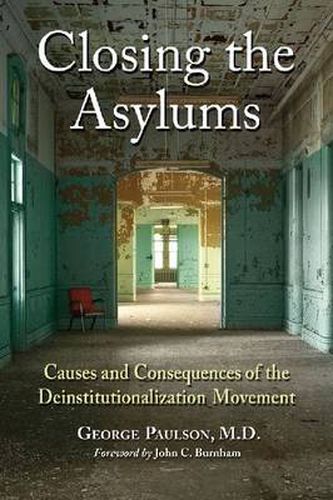
One of the most significant medical and social initiatives of the twentieth century was the demolition of the traditional state hospitals that housed most of the mentally ill, and the placement of the patients out into the community. The causes of this deinstitutionalization included both idealism and legal pressures, newly effective medications, the establishment of nursing and group homes, the woeful inadequacy of the aging giant hospitals, and an attitudinal change that emphasized environmental and social factors, not organic ones, as primarily responsible for mental illness. Though closing the asylums promised more freedom for many, encouraged community acceptance, and enhanced outpatient opportunities, there were unintended consequences: increased homelessness, significant prison incarcerations of the mentally ill, inadequate community support or governmental funding. This book is written from the point of view of an academic neurologist who has served 60 years as an employee or consultant in typical state mental institutions in North Carolina and Ohio.
$9.00 standard shipping within Australia
FREE standard shipping within Australia for orders over $100.00
Express & International shipping calculated at checkout
Stock availability can be subject to change without notice. We recommend calling the shop or contacting our online team to check availability of low stock items. Please see our Shopping Online page for more details.
This title is printed to order. This book may have been self-published. If so, we cannot guarantee the quality of the content. In the main most books will have gone through the editing process however some may not. We therefore suggest that you be aware of this before ordering this book. If in doubt check either the author or publisher’s details as we are unable to accept any returns unless they are faulty. Please contact us if you have any questions.
One of the most significant medical and social initiatives of the twentieth century was the demolition of the traditional state hospitals that housed most of the mentally ill, and the placement of the patients out into the community. The causes of this deinstitutionalization included both idealism and legal pressures, newly effective medications, the establishment of nursing and group homes, the woeful inadequacy of the aging giant hospitals, and an attitudinal change that emphasized environmental and social factors, not organic ones, as primarily responsible for mental illness. Though closing the asylums promised more freedom for many, encouraged community acceptance, and enhanced outpatient opportunities, there were unintended consequences: increased homelessness, significant prison incarcerations of the mentally ill, inadequate community support or governmental funding. This book is written from the point of view of an academic neurologist who has served 60 years as an employee or consultant in typical state mental institutions in North Carolina and Ohio.
Search our extensive online catalogue.
