Readings Newsletter
Become a Readings Member to make your shopping experience even easier.
Sign in or sign up for free!
You’re not far away from qualifying for FREE standard shipping within Australia
You’ve qualified for FREE standard shipping within Australia
The cart is loading…


This title is printed to order. This book may have been self-published. If so, we cannot guarantee the quality of the content. In the main most books will have gone through the editing process however some may not. We therefore suggest that you be aware of this before ordering this book. If in doubt check either the author or publisher’s details as we are unable to accept any returns unless they are faulty. Please contact us if you have any questions.
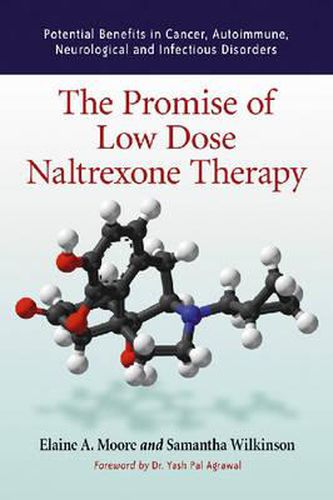
Naltrexone is an opiate antagonist drug developed in the 1970s and approved by the FDA in 1984 as a safe and effective treatment for opiate and drug abuse. When used at much lower doses in an off-label protocol referred to as low dose naltrexone (LDN), the drug has been shown to halt disease progression in Crohn’s disease and certain cancers, including pancreatic cancer, and to reduce symptoms in multiple sclerosis and autism. While ongoing clinical trials are evaluating the use of LDN in treating fibromyalgia and HIV/AIDS, it has been shown to improve numerous autoimmune and neurodegenerative conditions, including Parkinson’s disease and amyotrophic lateral sclerosis (ALS).Grounded in available clinical and scientific research, this book describes the history of naltrexone, including its potential therapeutic uses, its effects on the immune system, and its pharmacological properties. Aiming to acquaint readers with the potential therapeutic benefits of LDN, the book also includes practical chapters for those interested in its use, focusing on such topics as how the drug is administered, information on fillers and compounding pharmacies, lists of doctors who prescribe LDN, and available patient resources. It also features interviews with LDN patients and several of the country’s top LDN researchers, who describe the importance of LDN in terms of its ability to provide relief from pain, halt disease progression, and facilitate the body’s ability to heal. Finally, the work includes a useful glossary and an appendix listing important clinical trials completed to date, complete with researcher contact information and a summary of the trial outcomes.
$9.00 standard shipping within Australia
FREE standard shipping within Australia for orders over $100.00
Express & International shipping calculated at checkout
Stock availability can be subject to change without notice. We recommend calling the shop or contacting our online team to check availability of low stock items. Please see our Shopping Online page for more details.
This title is printed to order. This book may have been self-published. If so, we cannot guarantee the quality of the content. In the main most books will have gone through the editing process however some may not. We therefore suggest that you be aware of this before ordering this book. If in doubt check either the author or publisher’s details as we are unable to accept any returns unless they are faulty. Please contact us if you have any questions.
Naltrexone is an opiate antagonist drug developed in the 1970s and approved by the FDA in 1984 as a safe and effective treatment for opiate and drug abuse. When used at much lower doses in an off-label protocol referred to as low dose naltrexone (LDN), the drug has been shown to halt disease progression in Crohn’s disease and certain cancers, including pancreatic cancer, and to reduce symptoms in multiple sclerosis and autism. While ongoing clinical trials are evaluating the use of LDN in treating fibromyalgia and HIV/AIDS, it has been shown to improve numerous autoimmune and neurodegenerative conditions, including Parkinson’s disease and amyotrophic lateral sclerosis (ALS).Grounded in available clinical and scientific research, this book describes the history of naltrexone, including its potential therapeutic uses, its effects on the immune system, and its pharmacological properties. Aiming to acquaint readers with the potential therapeutic benefits of LDN, the book also includes practical chapters for those interested in its use, focusing on such topics as how the drug is administered, information on fillers and compounding pharmacies, lists of doctors who prescribe LDN, and available patient resources. It also features interviews with LDN patients and several of the country’s top LDN researchers, who describe the importance of LDN in terms of its ability to provide relief from pain, halt disease progression, and facilitate the body’s ability to heal. Finally, the work includes a useful glossary and an appendix listing important clinical trials completed to date, complete with researcher contact information and a summary of the trial outcomes.
Search our extensive online catalogue.
