Readings Newsletter
Become a Readings Member to make your shopping experience even easier.
Sign in or sign up for free!
You’re not far away from qualifying for FREE standard shipping within Australia
You’ve qualified for FREE standard shipping within Australia
The cart is loading…


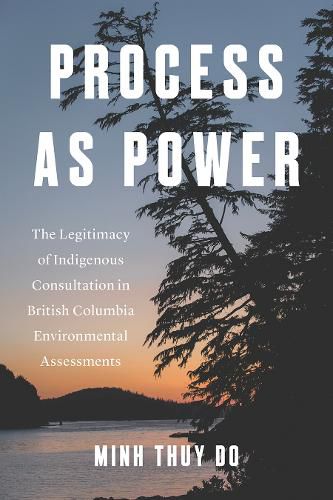
In British Columba, environmental assessment is required for major resource development projects to proceed, and Indigenous Peoples whose territory will be affected are legally entitled to be consulted as part of the process. Projects from the Galore Creek mine to the Trans Mountain pipeline expansion have involved Indigenous consultation, yet the purpose and outcomes have often been at odds.
Process as Power draws on interviews, judicial decisions, and environmental assessment reports to investigate the issue. The Supreme Court of Canada and the BC Court of Appeal have emphasized that consultation is necessary to demonstrate state legitimacy in matters that affect Aboriginal rights. Yet Indigenous participants consistently consider these consultative actions illegitimate because the state can structure the processes that determine the degree to which Indigenous perspectives are incorporated into decisions about the projects.
In evaluating the flaws of the current system, Minh Thuy Do considers reforms to produce a robust environmental assessment process that meaningfully advances reconciliation and addresses the state's legitimacy deficits.
$9.00 standard shipping within Australia
FREE standard shipping within Australia for orders over $100.00
Express & International shipping calculated at checkout
Stock availability can be subject to change without notice. We recommend calling the shop or contacting our online team to check availability of low stock items. Please see our Shopping Online page for more details.
In British Columba, environmental assessment is required for major resource development projects to proceed, and Indigenous Peoples whose territory will be affected are legally entitled to be consulted as part of the process. Projects from the Galore Creek mine to the Trans Mountain pipeline expansion have involved Indigenous consultation, yet the purpose and outcomes have often been at odds.
Process as Power draws on interviews, judicial decisions, and environmental assessment reports to investigate the issue. The Supreme Court of Canada and the BC Court of Appeal have emphasized that consultation is necessary to demonstrate state legitimacy in matters that affect Aboriginal rights. Yet Indigenous participants consistently consider these consultative actions illegitimate because the state can structure the processes that determine the degree to which Indigenous perspectives are incorporated into decisions about the projects.
In evaluating the flaws of the current system, Minh Thuy Do considers reforms to produce a robust environmental assessment process that meaningfully advances reconciliation and addresses the state's legitimacy deficits.
Search our extensive online catalogue.
