Readings Newsletter
Become a Readings Member to make your shopping experience even easier.
Sign in or sign up for free!
You’re not far away from qualifying for FREE standard shipping within Australia
You’ve qualified for FREE standard shipping within Australia
The cart is loading…


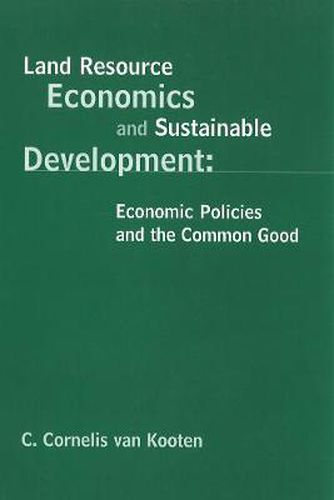
Land Resource Economics and Sustainable Development offers an introduction to current issues regarding land-use and describes the economic tools which are used in resolving land-use conflicts. The book defines land resources to include agricultural land, forest land, residential, commercial, and industrial land, recreational land, bodies of water such as lakes and rivers, and historical sites and national monuments. Van Kooten also discusses the waste receptor capacity of land, such as rubbish dumps and hazardous waste sites. This book provides a balanced approach to decision-making concerning the allocation of land resources and demonstrates how to use the tools of economic analysis to distribute land among alternative uses in such a way that the welfare of society is enhanced. Accordingly, the book focuses on what is best for society as a whole rather than that which an individual, a particular group of individuals, or a particular constituency, such as loggers or environmentalists may feel is in their interests.
$9.00 standard shipping within Australia
FREE standard shipping within Australia for orders over $100.00
Express & International shipping calculated at checkout
Stock availability can be subject to change without notice. We recommend calling the shop or contacting our online team to check availability of low stock items. Please see our Shopping Online page for more details.
Land Resource Economics and Sustainable Development offers an introduction to current issues regarding land-use and describes the economic tools which are used in resolving land-use conflicts. The book defines land resources to include agricultural land, forest land, residential, commercial, and industrial land, recreational land, bodies of water such as lakes and rivers, and historical sites and national monuments. Van Kooten also discusses the waste receptor capacity of land, such as rubbish dumps and hazardous waste sites. This book provides a balanced approach to decision-making concerning the allocation of land resources and demonstrates how to use the tools of economic analysis to distribute land among alternative uses in such a way that the welfare of society is enhanced. Accordingly, the book focuses on what is best for society as a whole rather than that which an individual, a particular group of individuals, or a particular constituency, such as loggers or environmentalists may feel is in their interests.
Search our extensive online catalogue.
