Readings Newsletter
Become a Readings Member to make your shopping experience even easier.
Sign in or sign up for free!
You’re not far away from qualifying for FREE standard shipping within Australia
You’ve qualified for FREE standard shipping within Australia
The cart is loading…


This title is printed to order. This book may have been self-published. If so, we cannot guarantee the quality of the content. In the main most books will have gone through the editing process however some may not. We therefore suggest that you be aware of this before ordering this book. If in doubt check either the author or publisher’s details as we are unable to accept any returns unless they are faulty. Please contact us if you have any questions.
Iconoclasm - the alteration, destruction, or displacement of icons - is usually considered taboo or profane. But, on occasion, the act of destroying the sacred unintentionally bestows iconic status on the desecrated object.
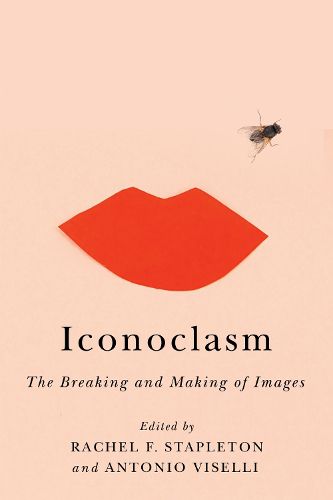
Iconoclasm examines the reciprocity between the building and the breaking of images, paying special attention to the constructive power of destructive acts. Although iconoclasm carries with it inherently religious connotations, this volume examines the shattering of images beyond the spiritual and the sacred. Presenting responses to renowned cultural anthropologist and theorist Michael Taussig, these essays centre on conceptual iconoclasm and explore the sacrality of objects and belief systems from historical, cultural, and disciplinary perspectives. From Milton and Nietzsche to Paul Newman and Banksy, through such diverse media and genres as photography, the popular romance novel, pornography, graffiti, cinema, advertising, and the dictionary, this book questions how icons and iconoclasms are represented, the language used to describe them, and the manner in which objects signify once they are shattered. An interdisciplinary, disconnected, and non-linear consideration of the historical and contemporary relationship between the sacred and the profane, Iconoclasm disrupts entrenched views about the revered or reviled idols present in most aspects of daily life. Contributors include T. Nikki Cesare Schotzko (Toronto), Christopher van Ginhoven Rey (Pomona College), Helen Hester (West London), Emily Hoffman (Arkansas Tech), Natalie B. Pendergast (Yukon College), Beth Saunders (Maryland), Adam Swann (Glasgow), Michael Taussig (Columbia), Angela Toscano (Iowa), Brendon Wocke (Perpignan).
$9.00 standard shipping within Australia
FREE standard shipping within Australia for orders over $100.00
Express & International shipping calculated at checkout
Stock availability can be subject to change without notice. We recommend calling the shop or contacting our online team to check availability of low stock items. Please see our Shopping Online page for more details.
This title is printed to order. This book may have been self-published. If so, we cannot guarantee the quality of the content. In the main most books will have gone through the editing process however some may not. We therefore suggest that you be aware of this before ordering this book. If in doubt check either the author or publisher’s details as we are unable to accept any returns unless they are faulty. Please contact us if you have any questions.
Iconoclasm - the alteration, destruction, or displacement of icons - is usually considered taboo or profane. But, on occasion, the act of destroying the sacred unintentionally bestows iconic status on the desecrated object.
Iconoclasm examines the reciprocity between the building and the breaking of images, paying special attention to the constructive power of destructive acts. Although iconoclasm carries with it inherently religious connotations, this volume examines the shattering of images beyond the spiritual and the sacred. Presenting responses to renowned cultural anthropologist and theorist Michael Taussig, these essays centre on conceptual iconoclasm and explore the sacrality of objects and belief systems from historical, cultural, and disciplinary perspectives. From Milton and Nietzsche to Paul Newman and Banksy, through such diverse media and genres as photography, the popular romance novel, pornography, graffiti, cinema, advertising, and the dictionary, this book questions how icons and iconoclasms are represented, the language used to describe them, and the manner in which objects signify once they are shattered. An interdisciplinary, disconnected, and non-linear consideration of the historical and contemporary relationship between the sacred and the profane, Iconoclasm disrupts entrenched views about the revered or reviled idols present in most aspects of daily life. Contributors include T. Nikki Cesare Schotzko (Toronto), Christopher van Ginhoven Rey (Pomona College), Helen Hester (West London), Emily Hoffman (Arkansas Tech), Natalie B. Pendergast (Yukon College), Beth Saunders (Maryland), Adam Swann (Glasgow), Michael Taussig (Columbia), Angela Toscano (Iowa), Brendon Wocke (Perpignan).
Search our extensive online catalogue.
