Readings Newsletter
Become a Readings Member to make your shopping experience even easier.
Sign in or sign up for free!
You’re not far away from qualifying for FREE standard shipping within Australia
You’ve qualified for FREE standard shipping within Australia
The cart is loading…


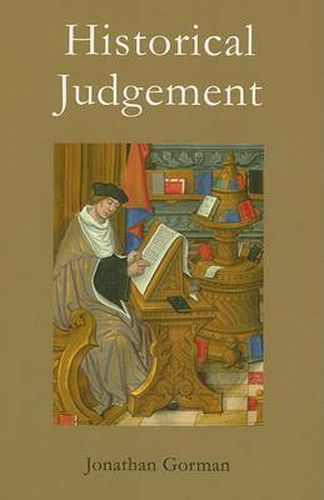
The historical profession is not noted for examining its own methodologies. Indeed, most historians are averse to historical theory. In Historical Judgement Jonathan Gorman’s response to this state of affairs is to argue that if we want to characterize a discipline, we need to look to persons who successfully occupy the role of being practitioners of that discipline. So to model historiography we must do so from the views of historians. Gorman begins by showing what it is to model a discipline by using recent philosophy of law and philosophy of science. There are different models at work, whose rivalry and resolution are to be historically understood. With this approach in place he is able to develop the history of historiography and explore the character of historiography as presented by historians. He reveals that historians conform to various norms - that historians now and in the past have agreed and disagreed about the same set of interrelated matters: truth-telling, moral judgement and the synthesis of facts - and it is this internal understanding that we need to recover if we are to arrive at a correct characterization of the discipline of historiography. Demonstrating how the practice of historiography requires choices and therefore the exercise of judgement, Gorman is able to show that in their making of judgements historians enjoy the immense benefit of hindsight. He shows how, in reflecting on their own discipline, historians have typically failed to attend adequately to the history of historiography, neglecting to situate previous historians within their historical contexts, or to pay adequate attention to the fact that present historians, too, are within a context that will change. In addition, Gorman’s approach, which emphasizes the power and necessity of choice, and which rests on the pragmatic holistic empiricism of Quine, shows postmodernism not to be the threat that some historians feel it to be, indeed, it is shown to be a radical form of empiricism. Gorman shows how the historical enterprise may be established in our factual and moral understanding in the light of our choices and commitments to a shared world. Historical Judgement is an original and important contribution to the philosophy of history. By bringing together the ideas of historians and philosophers, Gorman presents a much more practitioner-focused examination of the discipline of history, one that will, hopefully, encourage historians to think more about the nature of what they do.
$9.00 standard shipping within Australia
FREE standard shipping within Australia for orders over $100.00
Express & International shipping calculated at checkout
Stock availability can be subject to change without notice. We recommend calling the shop or contacting our online team to check availability of low stock items. Please see our Shopping Online page for more details.
The historical profession is not noted for examining its own methodologies. Indeed, most historians are averse to historical theory. In Historical Judgement Jonathan Gorman’s response to this state of affairs is to argue that if we want to characterize a discipline, we need to look to persons who successfully occupy the role of being practitioners of that discipline. So to model historiography we must do so from the views of historians. Gorman begins by showing what it is to model a discipline by using recent philosophy of law and philosophy of science. There are different models at work, whose rivalry and resolution are to be historically understood. With this approach in place he is able to develop the history of historiography and explore the character of historiography as presented by historians. He reveals that historians conform to various norms - that historians now and in the past have agreed and disagreed about the same set of interrelated matters: truth-telling, moral judgement and the synthesis of facts - and it is this internal understanding that we need to recover if we are to arrive at a correct characterization of the discipline of historiography. Demonstrating how the practice of historiography requires choices and therefore the exercise of judgement, Gorman is able to show that in their making of judgements historians enjoy the immense benefit of hindsight. He shows how, in reflecting on their own discipline, historians have typically failed to attend adequately to the history of historiography, neglecting to situate previous historians within their historical contexts, or to pay adequate attention to the fact that present historians, too, are within a context that will change. In addition, Gorman’s approach, which emphasizes the power and necessity of choice, and which rests on the pragmatic holistic empiricism of Quine, shows postmodernism not to be the threat that some historians feel it to be, indeed, it is shown to be a radical form of empiricism. Gorman shows how the historical enterprise may be established in our factual and moral understanding in the light of our choices and commitments to a shared world. Historical Judgement is an original and important contribution to the philosophy of history. By bringing together the ideas of historians and philosophers, Gorman presents a much more practitioner-focused examination of the discipline of history, one that will, hopefully, encourage historians to think more about the nature of what they do.
Search our extensive online catalogue.
