Readings Newsletter
Become a Readings Member to make your shopping experience even easier.
Sign in or sign up for free!
You’re not far away from qualifying for FREE standard shipping within Australia
You’ve qualified for FREE standard shipping within Australia
The cart is loading…


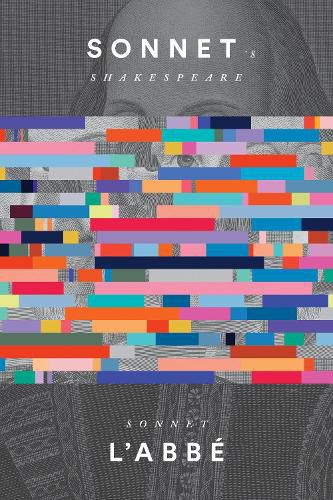
Bronwen Wallace Memorial Award-winning poet Sonnet L'Abbe returns with her third collection, in which a mixed-race woman decomposes her inheritance of Shakespeare by breaking open the sonnet and inventing an entirely new poetic form.
DOROTHY LIVESAY POETRY PRIZE FINALIST
RAYMOND SOUSTER AWARD FINALIST
How can poetry grapple with how some cultures assume the place of others? How can English-speaking writers use the English language to challenge the legacy of colonial literary values? In Sonnet’s Shakespeare, one young, half-dougla (mixed South Asian and Black) poet tries to use the master’s tools on the Bard’s house, attempting to dismantle his monumental place in her pysche and in the poetic canon.
In a defiant act of literary patricide and a feat of painstaking poetic labour, Sonnet L'Abbe works with the pages of Shakespeare’s sonnets as a space she will inhabit, as a place of power she will occupy. Letter by letter, she sits her own language down into the white spaces of Shakespeare’s poems, until she overwhelms the original text and effectively erases Shakespeare’s voice by subsuming his words into hers. In each of the 154 dense new poems of Sonnet’s Shakespeare sits one aggrocultured Shakespearean sonnet–displaced, spoken over, but never entirely silenced.
L'Abbe invented the process of Sonnet’s Shakespeare to find a way to sing from a body that knows both oppression and privilege. She uses the procedural techniques of Oulipian constraint and erasure poetries to harness the raw energies of her hyperconfessional, trauma-forged lyric voice. This is an artist’s magnum opus and mixed-race girlboy’s diary; the voice of a settler on stolen Indigenous territories, a sexual assault survivor, a lover of Sylvia Plath and Public Enemy. Touching on such themes as gender identity, pop music, nationhood, video games, and the search for interracial love, this book is a poetic achievement of undeniable scope and significance.
$9.00 standard shipping within Australia
FREE standard shipping within Australia for orders over $100.00
Express & International shipping calculated at checkout
Stock availability can be subject to change without notice. We recommend calling the shop or contacting our online team to check availability of low stock items. Please see our Shopping Online page for more details.
Bronwen Wallace Memorial Award-winning poet Sonnet L'Abbe returns with her third collection, in which a mixed-race woman decomposes her inheritance of Shakespeare by breaking open the sonnet and inventing an entirely new poetic form.
DOROTHY LIVESAY POETRY PRIZE FINALIST
RAYMOND SOUSTER AWARD FINALIST
How can poetry grapple with how some cultures assume the place of others? How can English-speaking writers use the English language to challenge the legacy of colonial literary values? In Sonnet’s Shakespeare, one young, half-dougla (mixed South Asian and Black) poet tries to use the master’s tools on the Bard’s house, attempting to dismantle his monumental place in her pysche and in the poetic canon.
In a defiant act of literary patricide and a feat of painstaking poetic labour, Sonnet L'Abbe works with the pages of Shakespeare’s sonnets as a space she will inhabit, as a place of power she will occupy. Letter by letter, she sits her own language down into the white spaces of Shakespeare’s poems, until she overwhelms the original text and effectively erases Shakespeare’s voice by subsuming his words into hers. In each of the 154 dense new poems of Sonnet’s Shakespeare sits one aggrocultured Shakespearean sonnet–displaced, spoken over, but never entirely silenced.
L'Abbe invented the process of Sonnet’s Shakespeare to find a way to sing from a body that knows both oppression and privilege. She uses the procedural techniques of Oulipian constraint and erasure poetries to harness the raw energies of her hyperconfessional, trauma-forged lyric voice. This is an artist’s magnum opus and mixed-race girlboy’s diary; the voice of a settler on stolen Indigenous territories, a sexual assault survivor, a lover of Sylvia Plath and Public Enemy. Touching on such themes as gender identity, pop music, nationhood, video games, and the search for interracial love, this book is a poetic achievement of undeniable scope and significance.
Search our extensive online catalogue.
