Readings Newsletter
Become a Readings Member to make your shopping experience even easier.
Sign in or sign up for free!
You’re not far away from qualifying for FREE standard shipping within Australia
You’ve qualified for FREE standard shipping within Australia
The cart is loading…


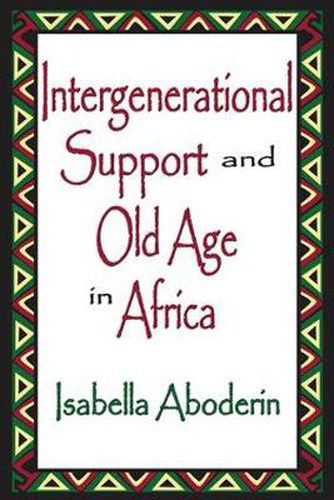
In most societies, of the world, including in Africa, responsibility for the material support of older people, unable to sustain themselves through work or investments, has originally resided with their younger generational family members - especially their adult children. Aboderin explores this topic specifically for Africa. In the wake of social or economic change, societies experience shifts in the degree in which families support their elders. Questions about the proper balance of family and state responsibilities, however, persist, especially in the light of socio-demographic trends and constraints in public expenditure. In most of sub-Saharan Africa, in contrast to other world regions, economic security policies for older people have not yet been formulated, despite declines in material family support along with rising poverty to which a growing elderly population is particularly exposed. In part, this betrays the crucial lack of understanding about how and why these shifts in support have occurred in African societies - and, thus, a profound uncertainty about what balance of individual, family and state responsibilities will be culturally appropriate and effective in ensuring economic security for older Africans both now and in the future. Abdorein aims to address these gaps in understanding. She provides an empirical and theoretical analysis of the micro and macro level processes that have underpinned recent declines in old age family support in African societies and likely parameters of future familial support. She also addresses more fundamental theoretical questions about how we should think about the relationships between intergenerational support, norms and values, and societal change. Intergenerational Support in Africa should be of interest to anyone interested in the subjects of African studies, economic policy and theory concerning elder care as well as those interested in sociology and social welfare development.
$9.00 standard shipping within Australia
FREE standard shipping within Australia for orders over $100.00
Express & International shipping calculated at checkout
Stock availability can be subject to change without notice. We recommend calling the shop or contacting our online team to check availability of low stock items. Please see our Shopping Online page for more details.
In most societies, of the world, including in Africa, responsibility for the material support of older people, unable to sustain themselves through work or investments, has originally resided with their younger generational family members - especially their adult children. Aboderin explores this topic specifically for Africa. In the wake of social or economic change, societies experience shifts in the degree in which families support their elders. Questions about the proper balance of family and state responsibilities, however, persist, especially in the light of socio-demographic trends and constraints in public expenditure. In most of sub-Saharan Africa, in contrast to other world regions, economic security policies for older people have not yet been formulated, despite declines in material family support along with rising poverty to which a growing elderly population is particularly exposed. In part, this betrays the crucial lack of understanding about how and why these shifts in support have occurred in African societies - and, thus, a profound uncertainty about what balance of individual, family and state responsibilities will be culturally appropriate and effective in ensuring economic security for older Africans both now and in the future. Abdorein aims to address these gaps in understanding. She provides an empirical and theoretical analysis of the micro and macro level processes that have underpinned recent declines in old age family support in African societies and likely parameters of future familial support. She also addresses more fundamental theoretical questions about how we should think about the relationships between intergenerational support, norms and values, and societal change. Intergenerational Support in Africa should be of interest to anyone interested in the subjects of African studies, economic policy and theory concerning elder care as well as those interested in sociology and social welfare development.
Search our extensive online catalogue.
