Readings Newsletter
Become a Readings Member to make your shopping experience even easier.
Sign in or sign up for free!
You’re not far away from qualifying for FREE standard shipping within Australia
You’ve qualified for FREE standard shipping within Australia
The cart is loading…


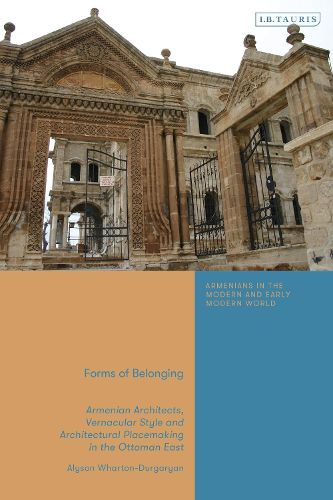
Contrary to the historical record, which views the architecture of the eastern Ottoman cities as unchanging remnants of a medieval and proto-Turkish golden age, this richly illustrated book highlights the wide-ranging transformations that Mardin, Diyarbakir, Urfa, Antep, Bitlis and Erzurum, saw at the hands of Armenian architects of the nineteenth and twentieth centuries.
Case studies reflect the agency of Armenian architects in constructing these buildings- whether churches, mansions, government offices, schools, or commercial structures. Each chapter looks to one of these cities and the participation of Armenians in shaping these places, not just through architecture but through city institutions, patronage, and benevolence. It argues that Armenians used the urban environment, and a uniquely Armenian reinvention of vernacular architecture, which reflected their religious, educational, intellectual, and political networks, to partake in the revival of these cities in an era marked by reforms to the Ottoman polity, political culture, and local governance. This was a show of popular belonging, and pride in local traditions, but it was also, merged with symbols of Ottoman authority, a reflection of the formation of Ottoman local elites, which included these Armenians - thus representing complex localization and Ottomanization processes at work. This book shows that there was not 'one' Armenian culture or identity, but many competing visions across Ottoman cities.
$9.00 standard shipping within Australia
FREE standard shipping within Australia for orders over $100.00
Express & International shipping calculated at checkout
Stock availability can be subject to change without notice. We recommend calling the shop or contacting our online team to check availability of low stock items. Please see our Shopping Online page for more details.
Contrary to the historical record, which views the architecture of the eastern Ottoman cities as unchanging remnants of a medieval and proto-Turkish golden age, this richly illustrated book highlights the wide-ranging transformations that Mardin, Diyarbakir, Urfa, Antep, Bitlis and Erzurum, saw at the hands of Armenian architects of the nineteenth and twentieth centuries.
Case studies reflect the agency of Armenian architects in constructing these buildings- whether churches, mansions, government offices, schools, or commercial structures. Each chapter looks to one of these cities and the participation of Armenians in shaping these places, not just through architecture but through city institutions, patronage, and benevolence. It argues that Armenians used the urban environment, and a uniquely Armenian reinvention of vernacular architecture, which reflected their religious, educational, intellectual, and political networks, to partake in the revival of these cities in an era marked by reforms to the Ottoman polity, political culture, and local governance. This was a show of popular belonging, and pride in local traditions, but it was also, merged with symbols of Ottoman authority, a reflection of the formation of Ottoman local elites, which included these Armenians - thus representing complex localization and Ottomanization processes at work. This book shows that there was not 'one' Armenian culture or identity, but many competing visions across Ottoman cities.
Search our extensive online catalogue.
