Readings Newsletter
Become a Readings Member to make your shopping experience even easier.
Sign in or sign up for free!
You’re not far away from qualifying for FREE standard shipping within Australia
You’ve qualified for FREE standard shipping within Australia
The cart is loading…


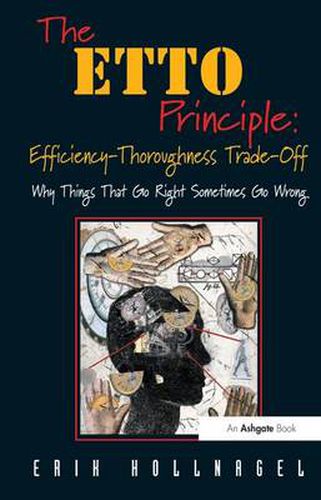
Accident investigation and risk assessment have for decades focused on the human factor, particularly ‘human error’. Countless books and papers have been written about how to identify, classify, eliminate, prevent and compensate for it. This bias towards the study of performance failures, leads to a neglect of normal or ‘error-free’ performance and the assumption that as failures and successes have different origins there is little to be gained from studying them together. Erik Hollnagel believes this assumption is false and that safety cannot be attained only by eliminating risks and failures. The ETTO Principle looks at the common trait of people at work to adjust what they do to match the conditions - to what has happened, to what happens, and to what may happen. It proposes that this efficiency-thoroughness trade-off (ETTO) - usually sacrificing thoroughness for efficiency - is normal. While in some cases the adjustments may lead to adverse outcomes, these are due to the very same processes that produce successes, rather than to errors and malfunctions. The ETTO Principle removes the need for specialised theories and models of failure and ‘human error’ and offers a viable basis for effective and just approaches to both reactive and proactive safety management.
$9.00 standard shipping within Australia
FREE standard shipping within Australia for orders over $100.00
Express & International shipping calculated at checkout
Stock availability can be subject to change without notice. We recommend calling the shop or contacting our online team to check availability of low stock items. Please see our Shopping Online page for more details.
Accident investigation and risk assessment have for decades focused on the human factor, particularly ‘human error’. Countless books and papers have been written about how to identify, classify, eliminate, prevent and compensate for it. This bias towards the study of performance failures, leads to a neglect of normal or ‘error-free’ performance and the assumption that as failures and successes have different origins there is little to be gained from studying them together. Erik Hollnagel believes this assumption is false and that safety cannot be attained only by eliminating risks and failures. The ETTO Principle looks at the common trait of people at work to adjust what they do to match the conditions - to what has happened, to what happens, and to what may happen. It proposes that this efficiency-thoroughness trade-off (ETTO) - usually sacrificing thoroughness for efficiency - is normal. While in some cases the adjustments may lead to adverse outcomes, these are due to the very same processes that produce successes, rather than to errors and malfunctions. The ETTO Principle removes the need for specialised theories and models of failure and ‘human error’ and offers a viable basis for effective and just approaches to both reactive and proactive safety management.
Search our extensive online catalogue.
