Readings Newsletter
Become a Readings Member to make your shopping experience even easier.
Sign in or sign up for free!
You’re not far away from qualifying for FREE standard shipping within Australia
You’ve qualified for FREE standard shipping within Australia
The cart is loading…


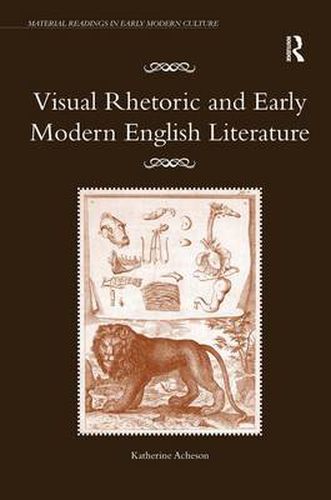
Early modern printed books are copiously illustrated with charts, diagrams, and other kinds of images that represent systems of thought and ways of doing things. Visual Rhetoric and Early Modern English Literature shows how these images fostered what Elizabeth Eisenstein called brainwork related to concepts of space, truth, art, and nature, and reveals their importance to poetry by Andrew Marvell and John Milton, and Aphra Behn’s Oroonoko. The genres of illustration considered in this book include military strategy and tactics, garden design, instrumentation, Bibles, scientific schema, drawing instruction, natural history, comparative anatomy, and Aesop’s Fables. The argument produces unique insights into the ways in which visual rhetoric affected verbal expression, and the book develops novel methods of using printed images as evidence in the interpretation of the rich, strange, and beautiful literature of early modern England.
$9.00 standard shipping within Australia
FREE standard shipping within Australia for orders over $100.00
Express & International shipping calculated at checkout
Stock availability can be subject to change without notice. We recommend calling the shop or contacting our online team to check availability of low stock items. Please see our Shopping Online page for more details.
Early modern printed books are copiously illustrated with charts, diagrams, and other kinds of images that represent systems of thought and ways of doing things. Visual Rhetoric and Early Modern English Literature shows how these images fostered what Elizabeth Eisenstein called brainwork related to concepts of space, truth, art, and nature, and reveals their importance to poetry by Andrew Marvell and John Milton, and Aphra Behn’s Oroonoko. The genres of illustration considered in this book include military strategy and tactics, garden design, instrumentation, Bibles, scientific schema, drawing instruction, natural history, comparative anatomy, and Aesop’s Fables. The argument produces unique insights into the ways in which visual rhetoric affected verbal expression, and the book develops novel methods of using printed images as evidence in the interpretation of the rich, strange, and beautiful literature of early modern England.
Search our extensive online catalogue.
