Readings Newsletter
Become a Readings Member to make your shopping experience even easier.
Sign in or sign up for free!
You’re not far away from qualifying for FREE standard shipping within Australia
You’ve qualified for FREE standard shipping within Australia
The cart is loading…


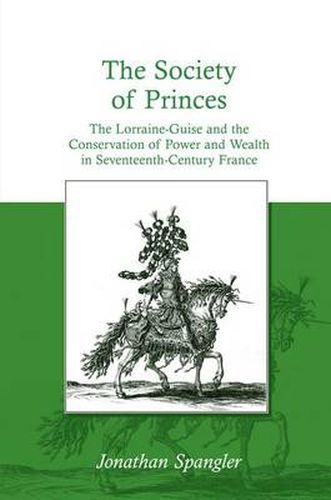
The princes etrangers, or the foreign princes, were an influential group of courtiers in early modern France, who maintained their unofficial status as ‘foreigners’ due to membership in sovereign ruling families. Arguably the most influential of these were the princes of Lorraine, a sovereign state on France’s eastern border. During the sixteenth century the Lorraine-Guise dominated the culture and politics of France, gaining a reputation as a powerful, manipulative family at the head of the Catholic League in the Wars of Religion and with close relationships with successive Valois monarchs and Catherine de Medici. After the traumas of 1588, however, although they faded from the narrative history of France, they nevertheless remained at the pinnacle of political culture until the end of the eighteenth century. This book examines the lesser-known period for the Guise at the later stages of the ancien regime, focusing on the recovery of lost fortunes, prestige, favour and influence that began towards the end of the reign of Louis XIII and continued through that of Louis XIV. Central to the work is the question of what it meant to be a member of a family of princely rank whose dynastic links outside the state guaranteed privileges and favours at the highest level. Jonathan Spangler investigates how an aristocratic family operated within that political culture, including facets of patronage (political, ecclesiastical, military, and the arts) and the meaning of dynasticism itself (marriages, testaments, women’s roles, multiplicity of loyalties). The result is a thorough examination of the nature of crown-noble relations in the era of absolutism as seen through the example of the Lorraine-Guise. It sheds light on how the family which had so threatened the equilibrium of the late Valois monarchy became one of the strongest pillars supporting the regime of the later Bourbons.
$9.00 standard shipping within Australia
FREE standard shipping within Australia for orders over $100.00
Express & International shipping calculated at checkout
Stock availability can be subject to change without notice. We recommend calling the shop or contacting our online team to check availability of low stock items. Please see our Shopping Online page for more details.
The princes etrangers, or the foreign princes, were an influential group of courtiers in early modern France, who maintained their unofficial status as ‘foreigners’ due to membership in sovereign ruling families. Arguably the most influential of these were the princes of Lorraine, a sovereign state on France’s eastern border. During the sixteenth century the Lorraine-Guise dominated the culture and politics of France, gaining a reputation as a powerful, manipulative family at the head of the Catholic League in the Wars of Religion and with close relationships with successive Valois monarchs and Catherine de Medici. After the traumas of 1588, however, although they faded from the narrative history of France, they nevertheless remained at the pinnacle of political culture until the end of the eighteenth century. This book examines the lesser-known period for the Guise at the later stages of the ancien regime, focusing on the recovery of lost fortunes, prestige, favour and influence that began towards the end of the reign of Louis XIII and continued through that of Louis XIV. Central to the work is the question of what it meant to be a member of a family of princely rank whose dynastic links outside the state guaranteed privileges and favours at the highest level. Jonathan Spangler investigates how an aristocratic family operated within that political culture, including facets of patronage (political, ecclesiastical, military, and the arts) and the meaning of dynasticism itself (marriages, testaments, women’s roles, multiplicity of loyalties). The result is a thorough examination of the nature of crown-noble relations in the era of absolutism as seen through the example of the Lorraine-Guise. It sheds light on how the family which had so threatened the equilibrium of the late Valois monarchy became one of the strongest pillars supporting the regime of the later Bourbons.
Search our extensive online catalogue.
