Readings Newsletter
Become a Readings Member to make your shopping experience even easier.
Sign in or sign up for free!
You’re not far away from qualifying for FREE standard shipping within Australia
You’ve qualified for FREE standard shipping within Australia
The cart is loading…


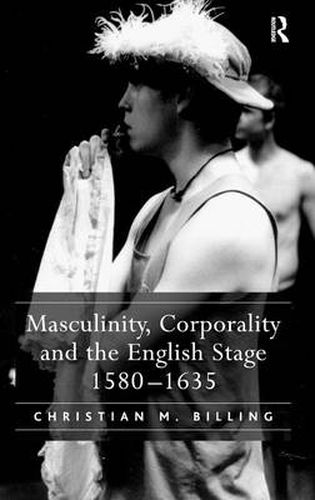
The significance of human anatomy to the most physical of art forms, the theatre, has hitherto been an under-explored topic. Filling this gap, Christian Billing questions conventional wisdom regarding the one-sex anatomical model and uses a range of medical treatises to delineate an emergent two-sex paradigm of human biology. The impact such a model had on the staging of the human form in English professional theatre is also explored in appraisals of: (i) the homo-erotic significance of a two-sex paradigm; (ii) social and theatrical cross-dressing; (iii) the uses of theatrical androgyny; (iv) masculine corporality and the representation of assertive women; and (v) the theatrical poetics of human dissection. Billing supports cultural and scientific study with close-readings of Lyly, Shakespeare, Jonson, Middleton, Dekker, Beaumont, Fletcher, and Ford. The book provides a sophisticated and original analysis of the early modern stage body as a discursive site in wider debates concerning sexuality and gender.
$9.00 standard shipping within Australia
FREE standard shipping within Australia for orders over $100.00
Express & International shipping calculated at checkout
Stock availability can be subject to change without notice. We recommend calling the shop or contacting our online team to check availability of low stock items. Please see our Shopping Online page for more details.
The significance of human anatomy to the most physical of art forms, the theatre, has hitherto been an under-explored topic. Filling this gap, Christian Billing questions conventional wisdom regarding the one-sex anatomical model and uses a range of medical treatises to delineate an emergent two-sex paradigm of human biology. The impact such a model had on the staging of the human form in English professional theatre is also explored in appraisals of: (i) the homo-erotic significance of a two-sex paradigm; (ii) social and theatrical cross-dressing; (iii) the uses of theatrical androgyny; (iv) masculine corporality and the representation of assertive women; and (v) the theatrical poetics of human dissection. Billing supports cultural and scientific study with close-readings of Lyly, Shakespeare, Jonson, Middleton, Dekker, Beaumont, Fletcher, and Ford. The book provides a sophisticated and original analysis of the early modern stage body as a discursive site in wider debates concerning sexuality and gender.
Search our extensive online catalogue.
