Readings Newsletter
Become a Readings Member to make your shopping experience even easier.
Sign in or sign up for free!
You’re not far away from qualifying for FREE standard shipping within Australia
You’ve qualified for FREE standard shipping within Australia
The cart is loading…


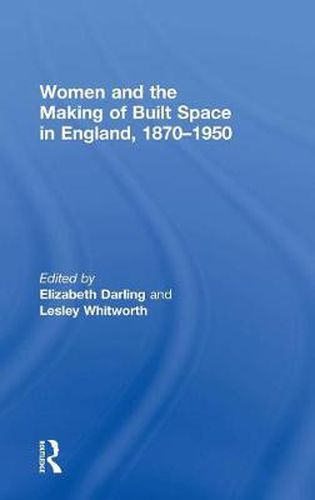
This interdisciplinary collection explores the relationships between women and built space in England between the 1870s and the 1940s. Historians working in cultural, literary, architectural, urban, design, labour, and social history approach the topic through case studies of often neglected organisations, individuals, practices and initiatives. Included are East End rent collectors, tenants, diarists and correspondents, the All-Europe House, the Women’s Co-operative Guild, the Housewives Committee of the Council of Industrial Design, provincial and metropolitan exhibitors, and activists of varying kinds. Moving beyond the study of buildings and their designers, the volume considers the making of space in its broadest sense, from the production of discourses to the consumption of domestic appliances and the performance of roles as diverse as social reformers, committee members and homemakers. It thereby demonstrates that women made a significant contribution to the creation of modern built environments in both public and private spheres.
$9.00 standard shipping within Australia
FREE standard shipping within Australia for orders over $100.00
Express & International shipping calculated at checkout
Stock availability can be subject to change without notice. We recommend calling the shop or contacting our online team to check availability of low stock items. Please see our Shopping Online page for more details.
This interdisciplinary collection explores the relationships between women and built space in England between the 1870s and the 1940s. Historians working in cultural, literary, architectural, urban, design, labour, and social history approach the topic through case studies of often neglected organisations, individuals, practices and initiatives. Included are East End rent collectors, tenants, diarists and correspondents, the All-Europe House, the Women’s Co-operative Guild, the Housewives Committee of the Council of Industrial Design, provincial and metropolitan exhibitors, and activists of varying kinds. Moving beyond the study of buildings and their designers, the volume considers the making of space in its broadest sense, from the production of discourses to the consumption of domestic appliances and the performance of roles as diverse as social reformers, committee members and homemakers. It thereby demonstrates that women made a significant contribution to the creation of modern built environments in both public and private spheres.
Search our extensive online catalogue.
