Readings Newsletter
Become a Readings Member to make your shopping experience even easier.
Sign in or sign up for free!
You’re not far away from qualifying for FREE standard shipping within Australia
You’ve qualified for FREE standard shipping within Australia
The cart is loading…


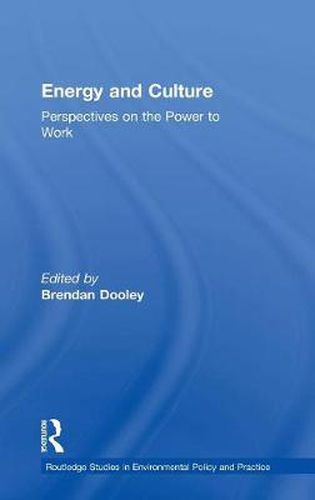
How will humanity continue to meet its energy needs without destroying the conditions necessary to sustain human life on earth? The search for an answer to this question depends as much on the past as on the present; and as much on the physical sciences as on the social sciences.
This book offers a truly trans-disciplinary and trans-cultural look at the problem of energy production and consumption in modern times. Discussing issues of history, politics, science, risk, lifestyle and representation, contributors demonstrate that experiences through time can provide insights into the kinds of solutions that have succeeded, as well as reasons why other solutions have failed. They also show what different countries and cultures might learn from each other, emphasizing how discoveries in one discipline have inspired new approaches in another discipline. Among many other important conclusions, the book suggests that energy transitions do not occur simply because of the exhaustion of old energy sources, and any solutions to the incipient energy crisis of the 21st century will depend on people’s perceptions of science, environment and risk, informed and shaped in turn by the media.
$9.00 standard shipping within Australia
FREE standard shipping within Australia for orders over $100.00
Express & International shipping calculated at checkout
Stock availability can be subject to change without notice. We recommend calling the shop or contacting our online team to check availability of low stock items. Please see our Shopping Online page for more details.
How will humanity continue to meet its energy needs without destroying the conditions necessary to sustain human life on earth? The search for an answer to this question depends as much on the past as on the present; and as much on the physical sciences as on the social sciences.
This book offers a truly trans-disciplinary and trans-cultural look at the problem of energy production and consumption in modern times. Discussing issues of history, politics, science, risk, lifestyle and representation, contributors demonstrate that experiences through time can provide insights into the kinds of solutions that have succeeded, as well as reasons why other solutions have failed. They also show what different countries and cultures might learn from each other, emphasizing how discoveries in one discipline have inspired new approaches in another discipline. Among many other important conclusions, the book suggests that energy transitions do not occur simply because of the exhaustion of old energy sources, and any solutions to the incipient energy crisis of the 21st century will depend on people’s perceptions of science, environment and risk, informed and shaped in turn by the media.
Search our extensive online catalogue.
