Readings Newsletter
Become a Readings Member to make your shopping experience even easier.
Sign in or sign up for free!
You’re not far away from qualifying for FREE standard shipping within Australia
You’ve qualified for FREE standard shipping within Australia
The cart is loading…


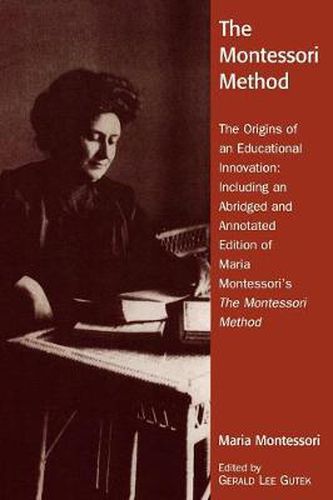
An essential resource for all students and scholars of early childhood education, this book offers a rich array of material about Maria Montessori and the Montessori Method. Distinguished education scholar Gerald Gutek begins with an in-depth biography of Montessori, exploring how a determined young woman overcame the obstacles that blocked her educational and career opportunities in Italy during the late Victorian age. The author then analyzes the sources and influences that shaped the Montessori philosophy of education. After laying the foundation for Montessori’s development, Gutek presents an annotated and abridged edition of The Montessori Method (1912), the seminal work that introduced her educational innovations to a U.S. audience. The book concludes with key historical documents, including disciple Anne E. George’s notes on the Montessori lectures and William H. Kilpatrick’s critique of the Montessori method. Preserving the historical context of Montessori’s contribution, Gutek also shows the continuing relevance of her thought to educational reform in the twenty-first century.
$9.00 standard shipping within Australia
FREE standard shipping within Australia for orders over $100.00
Express & International shipping calculated at checkout
Stock availability can be subject to change without notice. We recommend calling the shop or contacting our online team to check availability of low stock items. Please see our Shopping Online page for more details.
An essential resource for all students and scholars of early childhood education, this book offers a rich array of material about Maria Montessori and the Montessori Method. Distinguished education scholar Gerald Gutek begins with an in-depth biography of Montessori, exploring how a determined young woman overcame the obstacles that blocked her educational and career opportunities in Italy during the late Victorian age. The author then analyzes the sources and influences that shaped the Montessori philosophy of education. After laying the foundation for Montessori’s development, Gutek presents an annotated and abridged edition of The Montessori Method (1912), the seminal work that introduced her educational innovations to a U.S. audience. The book concludes with key historical documents, including disciple Anne E. George’s notes on the Montessori lectures and William H. Kilpatrick’s critique of the Montessori method. Preserving the historical context of Montessori’s contribution, Gutek also shows the continuing relevance of her thought to educational reform in the twenty-first century.
Search our extensive online catalogue.
