Readings Newsletter
Become a Readings Member to make your shopping experience even easier.
Sign in or sign up for free!
You’re not far away from qualifying for FREE standard shipping within Australia
You’ve qualified for FREE standard shipping within Australia
The cart is loading…


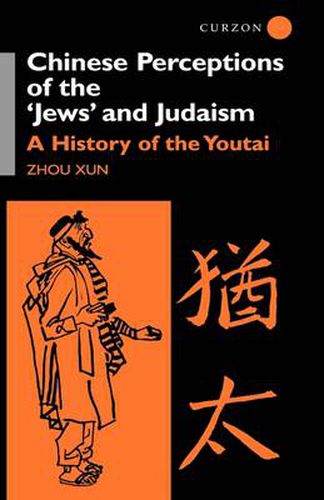
While prejudice against Jews is a real and ongoing category in Western culture, little attention has been paid to the myths of the Jews’ and their impact in countries outside the West. This work draws on a wide variety of source materials from the past two centuries to examine the images of the Jews’ as constructed in China. However, the interest here does not lie in the determination of the boundary between the real and fictional aspects of these images. Rather, it lies in the implications associated with the Jew’ as an other’, which remains a distant mirror in the construction of the self’ amongst various social groups in modern China. Although it has been noted by a few scholars that the use of the Jews’ as a category was important to many thinkers of modern China in the construction of their nationalistic and socio- political ideologies, this is the first systematic study in the field to be published. This book is also more than a historical book on China in that it opens a new arena for modern Jewish studies from a unique angle.
$9.00 standard shipping within Australia
FREE standard shipping within Australia for orders over $100.00
Express & International shipping calculated at checkout
Stock availability can be subject to change without notice. We recommend calling the shop or contacting our online team to check availability of low stock items. Please see our Shopping Online page for more details.
While prejudice against Jews is a real and ongoing category in Western culture, little attention has been paid to the myths of the Jews’ and their impact in countries outside the West. This work draws on a wide variety of source materials from the past two centuries to examine the images of the Jews’ as constructed in China. However, the interest here does not lie in the determination of the boundary between the real and fictional aspects of these images. Rather, it lies in the implications associated with the Jew’ as an other’, which remains a distant mirror in the construction of the self’ amongst various social groups in modern China. Although it has been noted by a few scholars that the use of the Jews’ as a category was important to many thinkers of modern China in the construction of their nationalistic and socio- political ideologies, this is the first systematic study in the field to be published. This book is also more than a historical book on China in that it opens a new arena for modern Jewish studies from a unique angle.
Search our extensive online catalogue.
