Readings Newsletter
Become a Readings Member to make your shopping experience even easier.
Sign in or sign up for free!
You’re not far away from qualifying for FREE standard shipping within Australia
You’ve qualified for FREE standard shipping within Australia
The cart is loading…


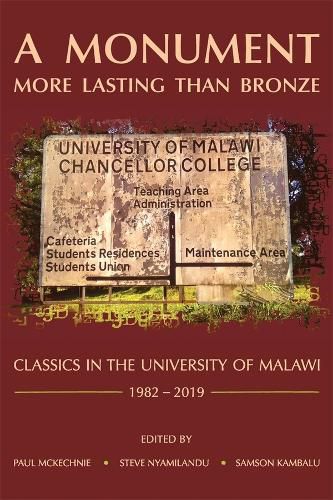
Formed in 1964, the year of independence, the University of Malawi promised more than the distant University College of Rhodesia and Nyasaland-founded 1952-ever could. A decade and a half later, Hastings Kamuzu Banda, by then Life President of the Republic of Malawi, let it be known to the University that a Department of Classics was to be established-teaching the history and languages of the ancient Mediterranean world at Zomba, on the edge of the African Rift Valley.
A Monument More Lasting than Bronze analyzes President Banda’s motives for this surreal intervention and the political goals it served, and also sketches out the shape the enterprise he called into being has taken-all in the context of worldwide transformations of Classics. A balanced team of authors, some Malawian, some foreign with Malawian connections, brings varied perspectives to this reflection.
$9.00 standard shipping within Australia
FREE standard shipping within Australia for orders over $100.00
Express & International shipping calculated at checkout
Stock availability can be subject to change without notice. We recommend calling the shop or contacting our online team to check availability of low stock items. Please see our Shopping Online page for more details.
Formed in 1964, the year of independence, the University of Malawi promised more than the distant University College of Rhodesia and Nyasaland-founded 1952-ever could. A decade and a half later, Hastings Kamuzu Banda, by then Life President of the Republic of Malawi, let it be known to the University that a Department of Classics was to be established-teaching the history and languages of the ancient Mediterranean world at Zomba, on the edge of the African Rift Valley.
A Monument More Lasting than Bronze analyzes President Banda’s motives for this surreal intervention and the political goals it served, and also sketches out the shape the enterprise he called into being has taken-all in the context of worldwide transformations of Classics. A balanced team of authors, some Malawian, some foreign with Malawian connections, brings varied perspectives to this reflection.
Search our extensive online catalogue.
