Readings Newsletter
Become a Readings Member to make your shopping experience even easier.
Sign in or sign up for free!
You’re not far away from qualifying for FREE standard shipping within Australia
You’ve qualified for FREE standard shipping within Australia
The cart is loading…


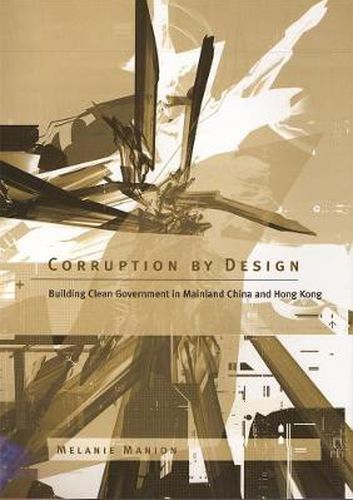
This book contrasts experiences of mainland China and Hong Kong to explore the pressing question of how governments can transform a culture of widespread corruption to one of clean government. Melanie Manion examines Hong Kong as the best example of the possibility of reform. Within a few years it achieved a spectacularly successful conversion to clean government. Mainland China illustrates the difficulty of reform. Despite more than two decades of anticorruption reform, corruption in China continues to spread essentially unabated.
The book argues that where corruption is already commonplace, the context in which officials and ordinary citizens make choices to transact corruptly (or not) is crucially different from that in which corrupt practices are uncommon. A central feature of this difference is the role of beliefs about the prevalence of corruption and the reliability of government as an enforcer of rules ostensibly constraining official venality. Anticorruption reform in a setting of widespread corruption is a problem not only of reducing corrupt payoffs, but also of changing broadly shared expectations of venality. The book explores differences in institutional design choices about anticorruption agencies, appropriate incentive structures, and underlying constitutional designs that contribute to the disparate outcomes in Hong Kong and mainland China.
$9.00 standard shipping within Australia
FREE standard shipping within Australia for orders over $100.00
Express & International shipping calculated at checkout
Stock availability can be subject to change without notice. We recommend calling the shop or contacting our online team to check availability of low stock items. Please see our Shopping Online page for more details.
This book contrasts experiences of mainland China and Hong Kong to explore the pressing question of how governments can transform a culture of widespread corruption to one of clean government. Melanie Manion examines Hong Kong as the best example of the possibility of reform. Within a few years it achieved a spectacularly successful conversion to clean government. Mainland China illustrates the difficulty of reform. Despite more than two decades of anticorruption reform, corruption in China continues to spread essentially unabated.
The book argues that where corruption is already commonplace, the context in which officials and ordinary citizens make choices to transact corruptly (or not) is crucially different from that in which corrupt practices are uncommon. A central feature of this difference is the role of beliefs about the prevalence of corruption and the reliability of government as an enforcer of rules ostensibly constraining official venality. Anticorruption reform in a setting of widespread corruption is a problem not only of reducing corrupt payoffs, but also of changing broadly shared expectations of venality. The book explores differences in institutional design choices about anticorruption agencies, appropriate incentive structures, and underlying constitutional designs that contribute to the disparate outcomes in Hong Kong and mainland China.
Search our extensive online catalogue.
