Readings Newsletter
Become a Readings Member to make your shopping experience even easier.
Sign in or sign up for free!
You’re not far away from qualifying for FREE standard shipping within Australia
You’ve qualified for FREE standard shipping within Australia
The cart is loading…


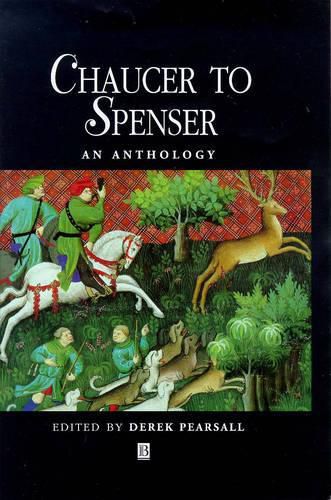
In this key anthology Derek Pearsall offers a radically new approach to those teaching and studying English writing from Geoffrey Chaucer to the early work of Edmund Spenser. Ignoring the traditional barrier between medieval, or Middle English, and Tudor, Elizabethan or early modern writing, he sets out to emphasize continuities and so counter the distorting view that English literature begins with Thomas Wyatt and the Earl of Surrey. Extensive coverage is given to key figures such as Chaucer and Langland, but this is not an anthology of English literature, but of writing. All forms of discursive writing - literary, political, legal, personal, polemic, spiritual, practical - are represented in an attempt to demonstrate the close mesh between writing, of all kinds, and the political, social and cultural practice of the time. The assumption of the collection is that written texts, though they may be analyzed from many points of view, including some that are legitimately ahistorical, are never better understood than when studied in their historical context. All texts are newly edited from the best sources and presented in their original spelling (apart from the substitution of obsolete letter-forms). On-the-page glossaries throughout give help with harder words. Headnotes and explanatory notes are provided for each text.
$9.00 standard shipping within Australia
FREE standard shipping within Australia for orders over $100.00
Express & International shipping calculated at checkout
Stock availability can be subject to change without notice. We recommend calling the shop or contacting our online team to check availability of low stock items. Please see our Shopping Online page for more details.
In this key anthology Derek Pearsall offers a radically new approach to those teaching and studying English writing from Geoffrey Chaucer to the early work of Edmund Spenser. Ignoring the traditional barrier between medieval, or Middle English, and Tudor, Elizabethan or early modern writing, he sets out to emphasize continuities and so counter the distorting view that English literature begins with Thomas Wyatt and the Earl of Surrey. Extensive coverage is given to key figures such as Chaucer and Langland, but this is not an anthology of English literature, but of writing. All forms of discursive writing - literary, political, legal, personal, polemic, spiritual, practical - are represented in an attempt to demonstrate the close mesh between writing, of all kinds, and the political, social and cultural practice of the time. The assumption of the collection is that written texts, though they may be analyzed from many points of view, including some that are legitimately ahistorical, are never better understood than when studied in their historical context. All texts are newly edited from the best sources and presented in their original spelling (apart from the substitution of obsolete letter-forms). On-the-page glossaries throughout give help with harder words. Headnotes and explanatory notes are provided for each text.
Search our extensive online catalogue.
