Readings Newsletter
Become a Readings Member to make your shopping experience even easier.
Sign in or sign up for free!
You’re not far away from qualifying for FREE standard shipping within Australia
You’ve qualified for FREE standard shipping within Australia
The cart is loading…


By the bloody fall of Acre in 1291, the Knights Templar had amassed a fortune rivaling the kings of Europe. Their castles, wealth, and military prowess were in notorious contrast to their humble origins. On Friday, October 13th, 1307, Philip had all of the Templars arrested in one surprising blow throughout all the domains of France. Lamenting a thing terrible to contemplate, horrible to hear, Phillip charged the Templars with heinous heresy, blasphemy, and homosexuality. After years of imprisonment and severe torture, many of the French Templars confessed to these crimes. Because their reputation was irrevocably damaged, Clement disbanded them and gave their property to their rivals, the Knights Hospitaller. To help understand the guilt of the Templars, it is necessary to look beyond the absolutes of guilt and innocence and find solace in a lovely shade of grey. By examining the heritage and tradition of Templar monasticism, the initiation ritual, and the charges made at the time of Philip’s suppression, it is possible to come to a better understanding of Templar initiation rite and open new discussion on the Templar’s guilt. Templar initiation rites did exist. By studying them, it is possible to see how real rituals and symbols might have been pejoratively interpreted by hostile outsiders. The resulting propaganda would lead to the destruction of one of the most powerful institutions in medieval history.
$9.00 standard shipping within Australia
FREE standard shipping within Australia for orders over $100.00
Express & International shipping calculated at checkout
Stock availability can be subject to change without notice. We recommend calling the shop or contacting our online team to check availability of low stock items. Please see our Shopping Online page for more details.
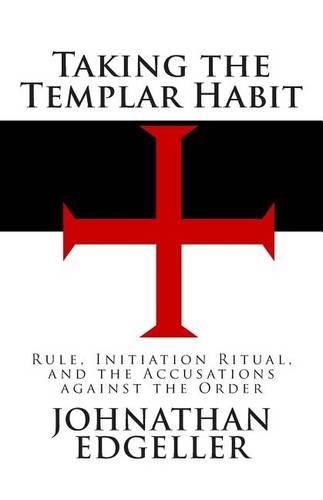
By the bloody fall of Acre in 1291, the Knights Templar had amassed a fortune rivaling the kings of Europe. Their castles, wealth, and military prowess were in notorious contrast to their humble origins. On Friday, October 13th, 1307, Philip had all of the Templars arrested in one surprising blow throughout all the domains of France. Lamenting a thing terrible to contemplate, horrible to hear, Phillip charged the Templars with heinous heresy, blasphemy, and homosexuality. After years of imprisonment and severe torture, many of the French Templars confessed to these crimes. Because their reputation was irrevocably damaged, Clement disbanded them and gave their property to their rivals, the Knights Hospitaller. To help understand the guilt of the Templars, it is necessary to look beyond the absolutes of guilt and innocence and find solace in a lovely shade of grey. By examining the heritage and tradition of Templar monasticism, the initiation ritual, and the charges made at the time of Philip’s suppression, it is possible to come to a better understanding of Templar initiation rite and open new discussion on the Templar’s guilt. Templar initiation rites did exist. By studying them, it is possible to see how real rituals and symbols might have been pejoratively interpreted by hostile outsiders. The resulting propaganda would lead to the destruction of one of the most powerful institutions in medieval history.
Search our extensive online catalogue.
