Readings Newsletter
Become a Readings Member to make your shopping experience even easier.
Sign in or sign up for free!
You’re not far away from qualifying for FREE standard shipping within Australia
You’ve qualified for FREE standard shipping within Australia
The cart is loading…


This title is printed to order. This book may have been self-published. If so, we cannot guarantee the quality of the content. In the main most books will have gone through the editing process however some may not. We therefore suggest that you be aware of this before ordering this book. If in doubt check either the author or publisher’s details as we are unable to accept any returns unless they are faulty. Please contact us if you have any questions.
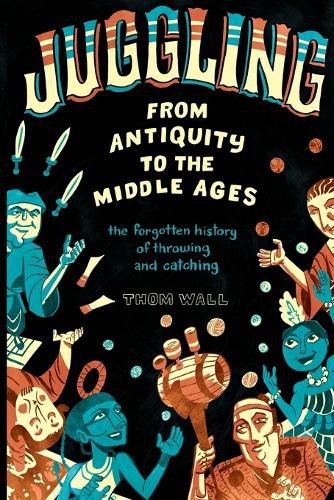
As with dance, so with juggling–the moment that the performer finishes the routine, their act ceases to exist beyond the memory of the audience. There is no permanent record of what transpired, so studying the ancient roots of juggling is fraught with difficulty.
Using the records that do exist, juggling appears to have emerged around the world in cultures independent of one another in the ancient past. Paintings in Egypt from 2000 BCE show jugglers engaged in performance. Stories from the island nation of Tonga place juggling’s creation with their goddess of the underworld–a figure who has guarded a cave since time immemorial. Juggling games and rituals are pervasive in isolated Inuit cultures in northern Canada and Greenland. Though the earliest representation of juggling is 4,000 years old, the practice is surely much older–in the same way that humans were doubtlessly singing and dancing long before the first bone flute was created.
This book is an attempt to catalogue this tangible history of juggling in human culture. It is the story of juggling, represented in art and writing from around the world, across time.
Although much has been written about modern jugglers-specific performers, their props, and their routines-little has been said about those who first developed the craft. As juggling enters a golden age in the internet era, Juggling: From Antiquity to the Middle Ages offers a look into the past–to the origins of our art form.
$9.00 standard shipping within Australia
FREE standard shipping within Australia for orders over $100.00
Express & International shipping calculated at checkout
Stock availability can be subject to change without notice. We recommend calling the shop or contacting our online team to check availability of low stock items. Please see our Shopping Online page for more details.
This title is printed to order. This book may have been self-published. If so, we cannot guarantee the quality of the content. In the main most books will have gone through the editing process however some may not. We therefore suggest that you be aware of this before ordering this book. If in doubt check either the author or publisher’s details as we are unable to accept any returns unless they are faulty. Please contact us if you have any questions.
As with dance, so with juggling–the moment that the performer finishes the routine, their act ceases to exist beyond the memory of the audience. There is no permanent record of what transpired, so studying the ancient roots of juggling is fraught with difficulty.
Using the records that do exist, juggling appears to have emerged around the world in cultures independent of one another in the ancient past. Paintings in Egypt from 2000 BCE show jugglers engaged in performance. Stories from the island nation of Tonga place juggling’s creation with their goddess of the underworld–a figure who has guarded a cave since time immemorial. Juggling games and rituals are pervasive in isolated Inuit cultures in northern Canada and Greenland. Though the earliest representation of juggling is 4,000 years old, the practice is surely much older–in the same way that humans were doubtlessly singing and dancing long before the first bone flute was created.
This book is an attempt to catalogue this tangible history of juggling in human culture. It is the story of juggling, represented in art and writing from around the world, across time.
Although much has been written about modern jugglers-specific performers, their props, and their routines-little has been said about those who first developed the craft. As juggling enters a golden age in the internet era, Juggling: From Antiquity to the Middle Ages offers a look into the past–to the origins of our art form.
Search our extensive online catalogue.
