Readings Newsletter
Become a Readings Member to make your shopping experience even easier.
Sign in or sign up for free!
You’re not far away from qualifying for FREE standard shipping within Australia
You’ve qualified for FREE standard shipping within Australia
The cart is loading…


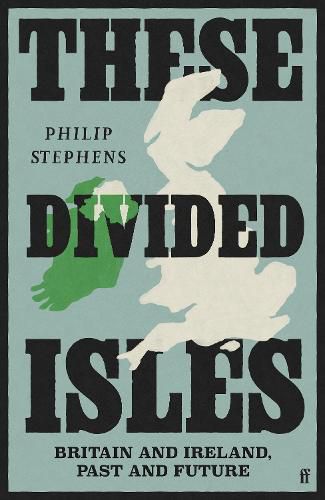
Lofty contempt and cruel indifference on one side, resentment hardening to rage on the other. This is a tale of deep division, of wars and terrorist violence, and of occasional moments of great courage on the part of British and Irish leaders. Over one hundred years after the Anglo-Irish treaty of 1922 divided Ireland into the twenty-six-county state in the south and the six-county British province in the north, events are writing another, perhaps closing, chapter in the relationship.In These Divided Isles, the award-winning journalist Philip Stephens cuts through layers of grievance and prejudice to explore the emotional intimacy and enmity of a relationship shaped by close familial ties as well as clashing national identities. He charts De Valera's path to a closed, conservative Irish Catholic state and the Republic's rediscovery of itself as a liberal European society in the nineties. He delves into Britain's indifference, frustration and inevitable entanglement in the troubled affairs of the province it created in order to break free from its colonial past, and he analyses the politics that shaped the Troubles and the peace process that led to the signature in 1998 of the Good Friday Agreement. Looking beyond these two nations' shores, Stephens teases out the serious danger wrought by Brexit and paints a fascinating portrait of the relationship with the rest of Europe and the United States, ever attentive to its thirty-five-million-strong Irish diaspora.Drawing on decades of writing about Anglo-Irish affairs for the Financial Times and interviews with key policymakers, Stephens maps this complex story and probes what a united Ireland could look like and how it might deploy its history to inform its future, rather than hold it in place. This is a timely, perceptive history, written with verve and deep insight.
$9.00 standard shipping within Australia
FREE standard shipping within Australia for orders over $100.00
Express & International shipping calculated at checkout
Stock availability can be subject to change without notice. We recommend calling the shop or contacting our online team to check availability of low stock items. Please see our Shopping Online page for more details.
Lofty contempt and cruel indifference on one side, resentment hardening to rage on the other. This is a tale of deep division, of wars and terrorist violence, and of occasional moments of great courage on the part of British and Irish leaders. Over one hundred years after the Anglo-Irish treaty of 1922 divided Ireland into the twenty-six-county state in the south and the six-county British province in the north, events are writing another, perhaps closing, chapter in the relationship.In These Divided Isles, the award-winning journalist Philip Stephens cuts through layers of grievance and prejudice to explore the emotional intimacy and enmity of a relationship shaped by close familial ties as well as clashing national identities. He charts De Valera's path to a closed, conservative Irish Catholic state and the Republic's rediscovery of itself as a liberal European society in the nineties. He delves into Britain's indifference, frustration and inevitable entanglement in the troubled affairs of the province it created in order to break free from its colonial past, and he analyses the politics that shaped the Troubles and the peace process that led to the signature in 1998 of the Good Friday Agreement. Looking beyond these two nations' shores, Stephens teases out the serious danger wrought by Brexit and paints a fascinating portrait of the relationship with the rest of Europe and the United States, ever attentive to its thirty-five-million-strong Irish diaspora.Drawing on decades of writing about Anglo-Irish affairs for the Financial Times and interviews with key policymakers, Stephens maps this complex story and probes what a united Ireland could look like and how it might deploy its history to inform its future, rather than hold it in place. This is a timely, perceptive history, written with verve and deep insight.
Search our extensive online catalogue.
