Readings Newsletter
Become a Readings Member to make your shopping experience even easier.
Sign in or sign up for free!
You’re not far away from qualifying for FREE standard shipping within Australia
You’ve qualified for FREE standard shipping within Australia
The cart is loading…


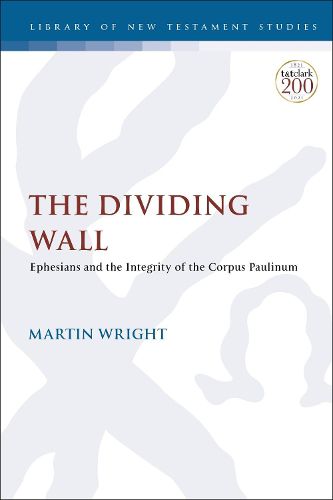
This book argues for the integrity of the Pauline Corpus as a complex, composite text. Martin Wright critiques the prevailing tendency to divide the Corpus in two, separating the undoubtedly authentic letters from those of disputed authorship. Instead, he advocates for a renewed canonical hermeneutic in which the Corpus as a whole communicates Paul’s legacy, and the authorship of individual letters is less important, stressing that that current preoccupations with authorship have a distorting effect on exegesis, and need to be reconsidered.
Wright uses Ephesians as a focal text to illustrate the exegetical potential of this approach. He critically investigates the history of the prevailing hermeneutics of pseudonymity, with particular attention to the theological and confessional partiality with which it is often inflected. And constructively, he proposes a new hermeneutical model in which the Pauline Corpus is read as a continuous interpretative dialogue, leaving the question of authorship to one side. In two substantial exegetical studies, Wright offers new readings of passages from Ephesians and other Pauline letters, amplifying the proposed approach and illustrating its value.
$9.00 standard shipping within Australia
FREE standard shipping within Australia for orders over $100.00
Express & International shipping calculated at checkout
Stock availability can be subject to change without notice. We recommend calling the shop or contacting our online team to check availability of low stock items. Please see our Shopping Online page for more details.
This book argues for the integrity of the Pauline Corpus as a complex, composite text. Martin Wright critiques the prevailing tendency to divide the Corpus in two, separating the undoubtedly authentic letters from those of disputed authorship. Instead, he advocates for a renewed canonical hermeneutic in which the Corpus as a whole communicates Paul’s legacy, and the authorship of individual letters is less important, stressing that that current preoccupations with authorship have a distorting effect on exegesis, and need to be reconsidered.
Wright uses Ephesians as a focal text to illustrate the exegetical potential of this approach. He critically investigates the history of the prevailing hermeneutics of pseudonymity, with particular attention to the theological and confessional partiality with which it is often inflected. And constructively, he proposes a new hermeneutical model in which the Pauline Corpus is read as a continuous interpretative dialogue, leaving the question of authorship to one side. In two substantial exegetical studies, Wright offers new readings of passages from Ephesians and other Pauline letters, amplifying the proposed approach and illustrating its value.
Search our extensive online catalogue.
