Readings Newsletter
Become a Readings Member to make your shopping experience even easier.
Sign in or sign up for free!
You’re not far away from qualifying for FREE standard shipping within Australia
You’ve qualified for FREE standard shipping within Australia
The cart is loading…


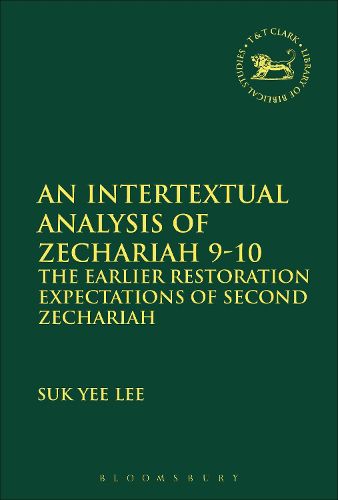
This book conducts an in-depth study on the ideas about future salvation in Zechariah 9-10. In accommodation of the allusive character of the text, Lee uses the methodology of intertextual analysis to examine the markers in the text. Having established the moments of intertextuality, Lee investigates the sources and their contexts, analyzing how the intertexts are used in the new context of the host and exploring how the antecedents shape the reading of the later text.
Thus, Lee argues that Zechariah 9-10 leverages earlier biblical material in order to express its view on restoration, which serves as a lens for the prophetic community in Yehud to make sense of their troubled world in the early Persian period, ca. 440 B.C. These two chapters envision the return of Yahweh who inaugurates the new age, ushering in prosperity and blessings. The earlier restoration expectations of Second Zechariah anticipate the formation of an ideal remnant settling in an ideal homeland, with Yahweh as king and David as vice-regent, reigning in Zion. The new commonwealth is not only a united society but also a cosmic one, with Judah, Ephraim, and the nations living together in peace.
$9.00 standard shipping within Australia
FREE standard shipping within Australia for orders over $100.00
Express & International shipping calculated at checkout
Stock availability can be subject to change without notice. We recommend calling the shop or contacting our online team to check availability of low stock items. Please see our Shopping Online page for more details.
This book conducts an in-depth study on the ideas about future salvation in Zechariah 9-10. In accommodation of the allusive character of the text, Lee uses the methodology of intertextual analysis to examine the markers in the text. Having established the moments of intertextuality, Lee investigates the sources and their contexts, analyzing how the intertexts are used in the new context of the host and exploring how the antecedents shape the reading of the later text.
Thus, Lee argues that Zechariah 9-10 leverages earlier biblical material in order to express its view on restoration, which serves as a lens for the prophetic community in Yehud to make sense of their troubled world in the early Persian period, ca. 440 B.C. These two chapters envision the return of Yahweh who inaugurates the new age, ushering in prosperity and blessings. The earlier restoration expectations of Second Zechariah anticipate the formation of an ideal remnant settling in an ideal homeland, with Yahweh as king and David as vice-regent, reigning in Zion. The new commonwealth is not only a united society but also a cosmic one, with Judah, Ephraim, and the nations living together in peace.
Search our extensive online catalogue.
