Readings Newsletter
Become a Readings Member to make your shopping experience even easier.
Sign in or sign up for free!
You’re not far away from qualifying for FREE standard shipping within Australia
You’ve qualified for FREE standard shipping within Australia
The cart is loading…


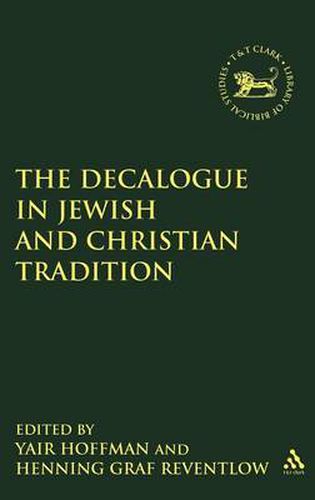
This collection of papers arrives from the eighth annual symposium between the Chaim Rosenberg School of Jewish Studies of Tel Aviv University and the Faculty of Protestant Theology of the University of Ruhr, Bochum held in Bochum, June 2007. The general theme of the Decalogue was examined in its various uses by both Jewish and Christian traditions throughout the centuries to the present.
Three papers deal with the origin of the Decalogue: Yair Hoffman on the rare mentioning of the Decalogue in the Hebrew Bible outside the Torah; E. L. Greenstein considers that already A. ibn Ezra doubted that God himself spoke in the Ten Commandments and states that more likely their rhetoric indicates it was Moses who proclaimed the Decalogue; A. Bar-Tour speaks about the cognitive aspects of the Decalogue revelation story and its frame.
The second part considers the later use of the Decalogue: G. Nebe describes its use with Paul; P. Wick discusses the symbolic radicalization of two commandments in James and the Sermon on the Mount; A. Oppenheimer explains the removal of the Decalogue from the daily Shem'a prayer as a measure against the minim’s claim of a higher religious importance of the Decalogue compared to the Torah; W. Geerlings examines Augustine’s quotations of the Decalogue; H. Reventlow depicts its central place in Luther’s catechisms; Y. Yacobson discusses its role with Hasidism.
The symposium closes with papers on systematic themes: C. Frey follows a possible way to legal universalism; G. Thomas describes the Decalogue as an Ethics of Risk ; F. H. Beyer/M. Waltemathe seek an educational perspective.
$9.00 standard shipping within Australia
FREE standard shipping within Australia for orders over $100.00
Express & International shipping calculated at checkout
Stock availability can be subject to change without notice. We recommend calling the shop or contacting our online team to check availability of low stock items. Please see our Shopping Online page for more details.
This collection of papers arrives from the eighth annual symposium between the Chaim Rosenberg School of Jewish Studies of Tel Aviv University and the Faculty of Protestant Theology of the University of Ruhr, Bochum held in Bochum, June 2007. The general theme of the Decalogue was examined in its various uses by both Jewish and Christian traditions throughout the centuries to the present.
Three papers deal with the origin of the Decalogue: Yair Hoffman on the rare mentioning of the Decalogue in the Hebrew Bible outside the Torah; E. L. Greenstein considers that already A. ibn Ezra doubted that God himself spoke in the Ten Commandments and states that more likely their rhetoric indicates it was Moses who proclaimed the Decalogue; A. Bar-Tour speaks about the cognitive aspects of the Decalogue revelation story and its frame.
The second part considers the later use of the Decalogue: G. Nebe describes its use with Paul; P. Wick discusses the symbolic radicalization of two commandments in James and the Sermon on the Mount; A. Oppenheimer explains the removal of the Decalogue from the daily Shem'a prayer as a measure against the minim’s claim of a higher religious importance of the Decalogue compared to the Torah; W. Geerlings examines Augustine’s quotations of the Decalogue; H. Reventlow depicts its central place in Luther’s catechisms; Y. Yacobson discusses its role with Hasidism.
The symposium closes with papers on systematic themes: C. Frey follows a possible way to legal universalism; G. Thomas describes the Decalogue as an Ethics of Risk ; F. H. Beyer/M. Waltemathe seek an educational perspective.
Search our extensive online catalogue.
