Readings Newsletter
Become a Readings Member to make your shopping experience even easier.
Sign in or sign up for free!
You’re not far away from qualifying for FREE standard shipping within Australia
You’ve qualified for FREE standard shipping within Australia
The cart is loading…


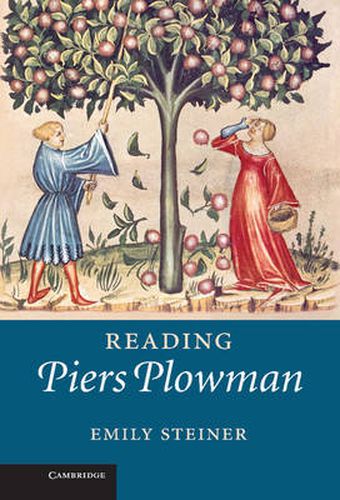
Reading ‘Piers Plowman’ is an indispensable scholarly guide to a magnificent - and notoriously difficult - medieval poem. With ‘Piers Plowman’, the fourteenth-century poet William Langland proved that English verse could be at once spiritually electrifying and intellectually rigorous, capable of imagining society in its totality while at the same time exploring heady ideas about language, theology and culture. In her study of Piers Plowman, Emily Steiner explores how Langland’s ambitious poetics emerged in dialogue with contemporary ideas; for example, about political counsel and gender, the ethics of poverty, Christian and pagan learning, lordship and servitude, and the long history of Christianity. Lucid and comprehensive, Steiner’s study teaches us to stay alert to the poem’s stunning effects while still making sense of its literary and historical contexts.
$9.00 standard shipping within Australia
FREE standard shipping within Australia for orders over $100.00
Express & International shipping calculated at checkout
Stock availability can be subject to change without notice. We recommend calling the shop or contacting our online team to check availability of low stock items. Please see our Shopping Online page for more details.
Reading ‘Piers Plowman’ is an indispensable scholarly guide to a magnificent - and notoriously difficult - medieval poem. With ‘Piers Plowman’, the fourteenth-century poet William Langland proved that English verse could be at once spiritually electrifying and intellectually rigorous, capable of imagining society in its totality while at the same time exploring heady ideas about language, theology and culture. In her study of Piers Plowman, Emily Steiner explores how Langland’s ambitious poetics emerged in dialogue with contemporary ideas; for example, about political counsel and gender, the ethics of poverty, Christian and pagan learning, lordship and servitude, and the long history of Christianity. Lucid and comprehensive, Steiner’s study teaches us to stay alert to the poem’s stunning effects while still making sense of its literary and historical contexts.
Search our extensive online catalogue.
