Readings Newsletter
Become a Readings Member to make your shopping experience even easier.
Sign in or sign up for free!
You’re not far away from qualifying for FREE standard shipping within Australia
You’ve qualified for FREE standard shipping within Australia
The cart is loading…


Faced with America’s military superiority, many countries are turning to weapons of mass destruction (WMD) as a means to deter United States intervention. However, the events of September 11 awakened America to a degree of vulnerability it had never experienced before, making it increasingly unwilling to tolerate such weapons in the hands of unstable and unpredictable regimes. Through theoretical, historical, and prescriptive lenses, this book explores the modern security dilemma created by the twin fears of American encroachment and vulnerability which form a vicious cycle of insecurity that challenges traditional notions of deterrence. Using Iraq and North Korea as case studies, Smith argues that the United States may need to re-evaluate its foreign policy strategies against WMD proliferation, giving renewed attention to defensive measures, negotiated disarmament, interdiction, and perhaps preemption.
$9.00 standard shipping within Australia
FREE standard shipping within Australia for orders over $100.00
Express & International shipping calculated at checkout
Stock availability can be subject to change without notice. We recommend calling the shop or contacting our online team to check availability of low stock items. Please see our Shopping Online page for more details.
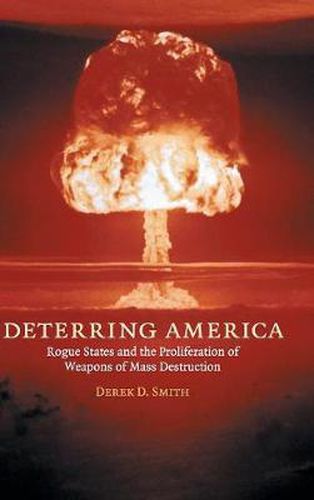
Faced with America’s military superiority, many countries are turning to weapons of mass destruction (WMD) as a means to deter United States intervention. However, the events of September 11 awakened America to a degree of vulnerability it had never experienced before, making it increasingly unwilling to tolerate such weapons in the hands of unstable and unpredictable regimes. Through theoretical, historical, and prescriptive lenses, this book explores the modern security dilemma created by the twin fears of American encroachment and vulnerability which form a vicious cycle of insecurity that challenges traditional notions of deterrence. Using Iraq and North Korea as case studies, Smith argues that the United States may need to re-evaluate its foreign policy strategies against WMD proliferation, giving renewed attention to defensive measures, negotiated disarmament, interdiction, and perhaps preemption.
Search our extensive online catalogue.
