Readings Newsletter
Become a Readings Member to make your shopping experience even easier.
Sign in or sign up for free!
You’re not far away from qualifying for FREE standard shipping within Australia
You’ve qualified for FREE standard shipping within Australia
The cart is loading…


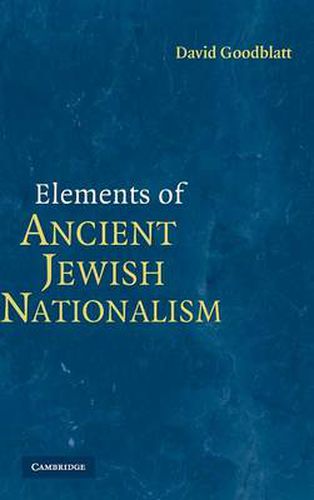
Contrary to the widespread view that nationalism is a modern phenomenon, Goodblatt argues that it can be found in the ancient world. He argues that concepts of nationalism compatible with contemporary social scientific theories can be documented in the ancient sources from the Mediterranean Rim by the middle of the last millennium BCE. In particular, the collective identity asserted by the Jews in antiquity fits contemporary definitions of nationalism. After the theoretical discussion in the opening chapter, the author examines several factors constitutive of ancient Jewish nationalism. He shows how this identity was socially constructed by such means as the mass dissemination of biblical literature, retention of the Hebrew language, and through the priestly caste. The author also discusses each of the names used to express Jewish national identity: Israel, Judah and Zion.
$9.00 standard shipping within Australia
FREE standard shipping within Australia for orders over $100.00
Express & International shipping calculated at checkout
Stock availability can be subject to change without notice. We recommend calling the shop or contacting our online team to check availability of low stock items. Please see our Shopping Online page for more details.
Contrary to the widespread view that nationalism is a modern phenomenon, Goodblatt argues that it can be found in the ancient world. He argues that concepts of nationalism compatible with contemporary social scientific theories can be documented in the ancient sources from the Mediterranean Rim by the middle of the last millennium BCE. In particular, the collective identity asserted by the Jews in antiquity fits contemporary definitions of nationalism. After the theoretical discussion in the opening chapter, the author examines several factors constitutive of ancient Jewish nationalism. He shows how this identity was socially constructed by such means as the mass dissemination of biblical literature, retention of the Hebrew language, and through the priestly caste. The author also discusses each of the names used to express Jewish national identity: Israel, Judah and Zion.
Search our extensive online catalogue.
