Readings Newsletter
Become a Readings Member to make your shopping experience even easier.
Sign in or sign up for free!
You’re not far away from qualifying for FREE standard shipping within Australia
You’ve qualified for FREE standard shipping within Australia
The cart is loading…


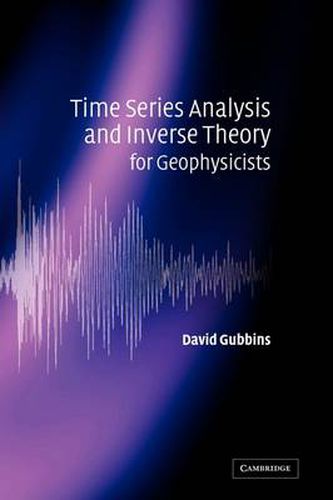
This unique textbook provides the foundation for understanding and applying techniques commonly used in geophysics to process and interpret modern digital data. The geophysicist’s toolkit contains a range of techniques which may be divided into two main groups: processing, which concerns time series analysis and is used to separate the signal of interest from background noise; and inversion, which involves generating some map or physical model from the data. These two groups of techniques are normally taught separately, but are here presented together as parts I and II of the book. Part III describes some real applications and includes case studies in seismology, geomagnetism, and gravity. This textbook gives students and practitioners the theoretical background and practical experience, through case studies, computer examples and exercises, to understand and apply new processing methods to modern geophysical datasets. Solutions to the exercises are available on a website at http://publishing.cambridge.org/resources/0521819652
$9.00 standard shipping within Australia
FREE standard shipping within Australia for orders over $100.00
Express & International shipping calculated at checkout
Stock availability can be subject to change without notice. We recommend calling the shop or contacting our online team to check availability of low stock items. Please see our Shopping Online page for more details.
This unique textbook provides the foundation for understanding and applying techniques commonly used in geophysics to process and interpret modern digital data. The geophysicist’s toolkit contains a range of techniques which may be divided into two main groups: processing, which concerns time series analysis and is used to separate the signal of interest from background noise; and inversion, which involves generating some map or physical model from the data. These two groups of techniques are normally taught separately, but are here presented together as parts I and II of the book. Part III describes some real applications and includes case studies in seismology, geomagnetism, and gravity. This textbook gives students and practitioners the theoretical background and practical experience, through case studies, computer examples and exercises, to understand and apply new processing methods to modern geophysical datasets. Solutions to the exercises are available on a website at http://publishing.cambridge.org/resources/0521819652
Search our extensive online catalogue.
