Readings Newsletter
Become a Readings Member to make your shopping experience even easier.
Sign in or sign up for free!
You’re not far away from qualifying for FREE standard shipping within Australia
You’ve qualified for FREE standard shipping within Australia
The cart is loading…


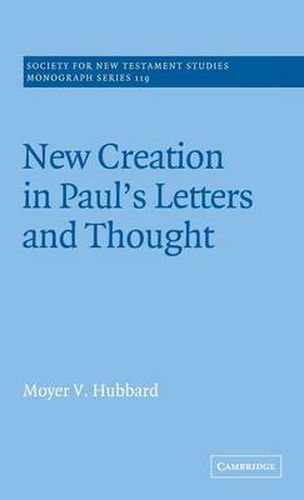
As a biblical motif, ‘new creation’ resonates throughout the pages of the Jewish and Christian Scriptures, and occupies a central place in the apostle Paul’s vision of the Christian life. Yet the biblical and extra-biblical occurrences of this theme vary widely in meaning, referring to either a new cosmos, a new community, or a new individual. Beginning with the Old Testament and working through the important texts of Second Temple Judaism, Moyer V. Hubbard focuses on how the motif functions in the argument, strategy, and literary structure of these documents, highlighting its role as the solution to the perceived plight. He then explores in detail which senses of the term Paul intends in Galatians 6.15 and 2 Corinthians 5.17, concluding that ‘new creation’ in Paul’s letters describes the Spirit-wrought newness of the person in Christ, and is fundamentally anthropological in orientation.
$9.00 standard shipping within Australia
FREE standard shipping within Australia for orders over $100.00
Express & International shipping calculated at checkout
Stock availability can be subject to change without notice. We recommend calling the shop or contacting our online team to check availability of low stock items. Please see our Shopping Online page for more details.
As a biblical motif, ‘new creation’ resonates throughout the pages of the Jewish and Christian Scriptures, and occupies a central place in the apostle Paul’s vision of the Christian life. Yet the biblical and extra-biblical occurrences of this theme vary widely in meaning, referring to either a new cosmos, a new community, or a new individual. Beginning with the Old Testament and working through the important texts of Second Temple Judaism, Moyer V. Hubbard focuses on how the motif functions in the argument, strategy, and literary structure of these documents, highlighting its role as the solution to the perceived plight. He then explores in detail which senses of the term Paul intends in Galatians 6.15 and 2 Corinthians 5.17, concluding that ‘new creation’ in Paul’s letters describes the Spirit-wrought newness of the person in Christ, and is fundamentally anthropological in orientation.
Search our extensive online catalogue.
