Readings Newsletter
Become a Readings Member to make your shopping experience even easier.
Sign in or sign up for free!
You’re not far away from qualifying for FREE standard shipping within Australia
You’ve qualified for FREE standard shipping within Australia
The cart is loading…


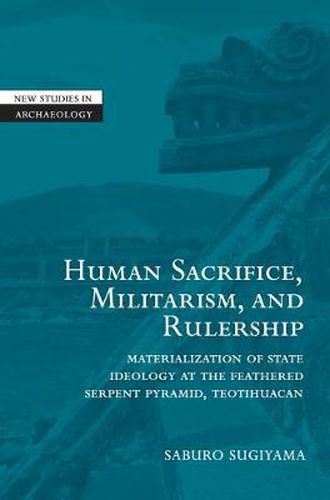
Teotihuacan was one of the earliest and more populous preColumbian cities, and the Feathered Serpent was its vital monument, erected circa 200 AD. This work explores the religious meanings and political implications of the pyramid with meticulous and thorough analyses of substantially new excavation data. Challenging the traditional view of the city as a legendary, sacred, or anonymously-governed centre, the book provides significant new insights on the Teotihuacan polity and society. It provides interpretations on the pyramid’s location, architecture, sculptures, iconography, mass sacrificial graves and rich symbolic offerings, and concludes that the pyramid commemorated the accession of rulers who were inscribed to govern with military force on behalf of the gods. This archaeological examination of the monument shows it to be the physical manifestation of state ideologies such as the symbolism of human sacrifice, militarism, and individual-centred divine authority, ideologies which were later diffused among other Mesoamerican urban centres.
$9.00 standard shipping within Australia
FREE standard shipping within Australia for orders over $100.00
Express & International shipping calculated at checkout
Stock availability can be subject to change without notice. We recommend calling the shop or contacting our online team to check availability of low stock items. Please see our Shopping Online page for more details.
Teotihuacan was one of the earliest and more populous preColumbian cities, and the Feathered Serpent was its vital monument, erected circa 200 AD. This work explores the religious meanings and political implications of the pyramid with meticulous and thorough analyses of substantially new excavation data. Challenging the traditional view of the city as a legendary, sacred, or anonymously-governed centre, the book provides significant new insights on the Teotihuacan polity and society. It provides interpretations on the pyramid’s location, architecture, sculptures, iconography, mass sacrificial graves and rich symbolic offerings, and concludes that the pyramid commemorated the accession of rulers who were inscribed to govern with military force on behalf of the gods. This archaeological examination of the monument shows it to be the physical manifestation of state ideologies such as the symbolism of human sacrifice, militarism, and individual-centred divine authority, ideologies which were later diffused among other Mesoamerican urban centres.
Search our extensive online catalogue.
