Readings Newsletter
Become a Readings Member to make your shopping experience even easier.
Sign in or sign up for free!
You’re not far away from qualifying for FREE standard shipping within Australia
You’ve qualified for FREE standard shipping within Australia
The cart is loading…


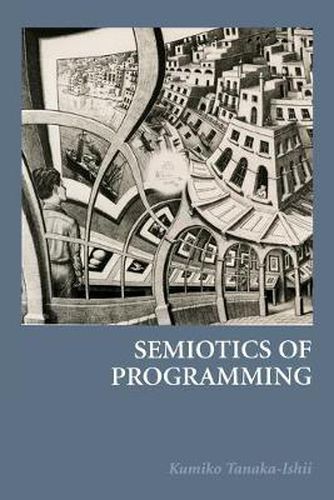
Tanaka-Ishii presents a semiotic analysis of computer programs along three axes: models of signs, kinds of signs, and systems of signs. Because computer programs are well defined and rigid, applying semiotic theories to them will help to reorganise the semiotic theories themselves. Semiotic discussion of programming theory can provide possible explanations for why programming has developed as it has and how computation is fundamentally related to human semiosis. This book considers the question of what computers can and cannot do, by analysing how computer sign systems compare to those of humans. A key concept throughout is reflexivity - the capability of a system or function to reinterpret what it has produced by itself. Sign systems are reflexive by nature, and humans know how to take advantage of this characteristic but have not yet fully implemented it into computer systems. The limitations, therefore, of current computers can be ascribed to insufficient reflexivity.
$9.00 standard shipping within Australia
FREE standard shipping within Australia for orders over $100.00
Express & International shipping calculated at checkout
Stock availability can be subject to change without notice. We recommend calling the shop or contacting our online team to check availability of low stock items. Please see our Shopping Online page for more details.
Tanaka-Ishii presents a semiotic analysis of computer programs along three axes: models of signs, kinds of signs, and systems of signs. Because computer programs are well defined and rigid, applying semiotic theories to them will help to reorganise the semiotic theories themselves. Semiotic discussion of programming theory can provide possible explanations for why programming has developed as it has and how computation is fundamentally related to human semiosis. This book considers the question of what computers can and cannot do, by analysing how computer sign systems compare to those of humans. A key concept throughout is reflexivity - the capability of a system or function to reinterpret what it has produced by itself. Sign systems are reflexive by nature, and humans know how to take advantage of this characteristic but have not yet fully implemented it into computer systems. The limitations, therefore, of current computers can be ascribed to insufficient reflexivity.
Search our extensive online catalogue.
