Readings Newsletter
Become a Readings Member to make your shopping experience even easier.
Sign in or sign up for free!
You’re not far away from qualifying for FREE standard shipping within Australia
You’ve qualified for FREE standard shipping within Australia
The cart is loading…


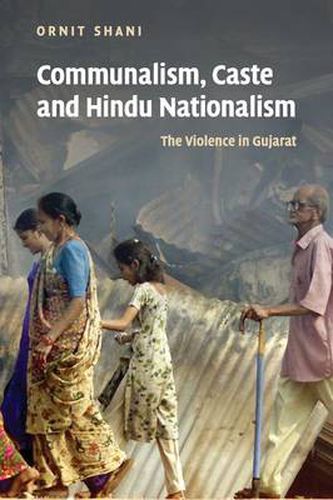
Belligerent Hindu nationalism, accompanied by recurring communal violence between Hindus and Muslims, has become a compelling force in Indian politics over the last two decades. Ornit Shani’s book examines the rise of Hindu nationalism, asking why distinct groups of Hindus, deeply divided by caste, mobilised on the basis of unitary Hindu nationalism, and why the Hindu nationalist rhetoric about the threat of the impoverished Muslim minority was so persuasive to the Hindu majority. Using evidence from communal violence in Gujarat, Shani argues that the growth of communalism was not simply a result of Hindu-Muslim antagonisms, but was driven by intensifying tensions among Hindus, nurtured by changes in the relations between castes and associated state policies. These, in turn, were frequently displaced onto Muslims, thus enabling caste conflicts to develop and deepen communal rivalries. The book offers a challenge to previous scholarship on the rise of communalism, which will be welcomed by students and professionals.
$9.00 standard shipping within Australia
FREE standard shipping within Australia for orders over $100.00
Express & International shipping calculated at checkout
Stock availability can be subject to change without notice. We recommend calling the shop or contacting our online team to check availability of low stock items. Please see our Shopping Online page for more details.
Belligerent Hindu nationalism, accompanied by recurring communal violence between Hindus and Muslims, has become a compelling force in Indian politics over the last two decades. Ornit Shani’s book examines the rise of Hindu nationalism, asking why distinct groups of Hindus, deeply divided by caste, mobilised on the basis of unitary Hindu nationalism, and why the Hindu nationalist rhetoric about the threat of the impoverished Muslim minority was so persuasive to the Hindu majority. Using evidence from communal violence in Gujarat, Shani argues that the growth of communalism was not simply a result of Hindu-Muslim antagonisms, but was driven by intensifying tensions among Hindus, nurtured by changes in the relations between castes and associated state policies. These, in turn, were frequently displaced onto Muslims, thus enabling caste conflicts to develop and deepen communal rivalries. The book offers a challenge to previous scholarship on the rise of communalism, which will be welcomed by students and professionals.
Search our extensive online catalogue.
