Readings Newsletter
Become a Readings Member to make your shopping experience even easier.
Sign in or sign up for free!
You’re not far away from qualifying for FREE standard shipping within Australia
You’ve qualified for FREE standard shipping within Australia
The cart is loading…


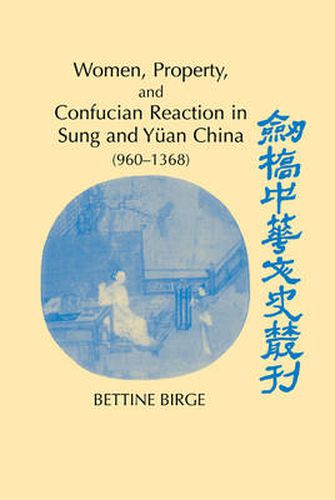
This book argues that the Mongol invasion of the thirteenth century precipitated a transformation of marriage and property law in China that deprived women of their property rights and reduced their legal and economic autonomy. It describes how after a period during which women’s property rights were steadily improving, and laws and practices affecting marriage and property were moving away from Confucian ideals, the Mongol occupation created a new constellation of property and gender relations that persisted to the end of the imperial era. It shows how the Mongol-Yuan rule in China ironically created the conditions for radical changes in the law, which for the first time brought it into line with the goals of Learning the Way Confucians and which curtailed women’s financial and personal autonomy. The book re-evaluates the Mongol invasion and its influence on Chinese law and society.
$9.00 standard shipping within Australia
FREE standard shipping within Australia for orders over $100.00
Express & International shipping calculated at checkout
Stock availability can be subject to change without notice. We recommend calling the shop or contacting our online team to check availability of low stock items. Please see our Shopping Online page for more details.
This book argues that the Mongol invasion of the thirteenth century precipitated a transformation of marriage and property law in China that deprived women of their property rights and reduced their legal and economic autonomy. It describes how after a period during which women’s property rights were steadily improving, and laws and practices affecting marriage and property were moving away from Confucian ideals, the Mongol occupation created a new constellation of property and gender relations that persisted to the end of the imperial era. It shows how the Mongol-Yuan rule in China ironically created the conditions for radical changes in the law, which for the first time brought it into line with the goals of Learning the Way Confucians and which curtailed women’s financial and personal autonomy. The book re-evaluates the Mongol invasion and its influence on Chinese law and society.
Search our extensive online catalogue.
