Readings Newsletter
Become a Readings Member to make your shopping experience even easier.
Sign in or sign up for free!
You’re not far away from qualifying for FREE standard shipping within Australia
You’ve qualified for FREE standard shipping within Australia
The cart is loading…


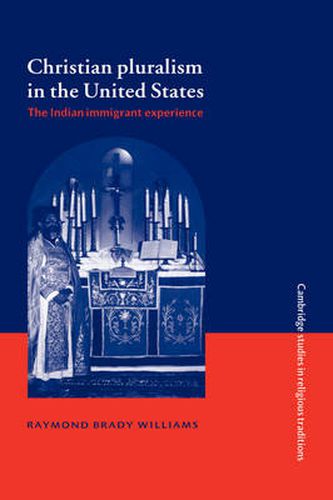
Recent immigrant Christians from India are changing the face of American Christianity. They are establishing churches with Orthodox, Protestant, and Catholic rites. This book is the first comprehensive study of these Christians, their churches, and their adaptation. Professor Williams describes migration patterns since 1965, and how the role of Indian Christian nurses in creating immigration opportunities for their families affects gender relations, transition of generations, interpretations of migration, Indian Christian family values, and types of leadership. Contemporary mobility and rapid communication create new transnational religious groups, and Williams reveals some of the reverse effects on churches and institutions in India. He notes some successes and failures of mediating institutions in the United States in responding to new forms of Christianity brought by immigrants.
$9.00 standard shipping within Australia
FREE standard shipping within Australia for orders over $100.00
Express & International shipping calculated at checkout
Stock availability can be subject to change without notice. We recommend calling the shop or contacting our online team to check availability of low stock items. Please see our Shopping Online page for more details.
Recent immigrant Christians from India are changing the face of American Christianity. They are establishing churches with Orthodox, Protestant, and Catholic rites. This book is the first comprehensive study of these Christians, their churches, and their adaptation. Professor Williams describes migration patterns since 1965, and how the role of Indian Christian nurses in creating immigration opportunities for their families affects gender relations, transition of generations, interpretations of migration, Indian Christian family values, and types of leadership. Contemporary mobility and rapid communication create new transnational religious groups, and Williams reveals some of the reverse effects on churches and institutions in India. He notes some successes and failures of mediating institutions in the United States in responding to new forms of Christianity brought by immigrants.
Search our extensive online catalogue.
