Readings Newsletter
Become a Readings Member to make your shopping experience even easier.
Sign in or sign up for free!
You’re not far away from qualifying for FREE standard shipping within Australia
You’ve qualified for FREE standard shipping within Australia
The cart is loading…


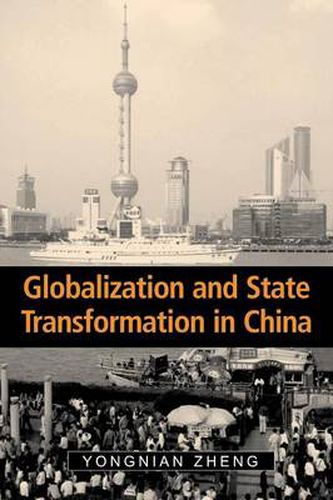
Globalization has thrown up challenges and opportunities which all countries have to grapple with. In his book, Yongnian Zheng explores how China’s leaders have embraced global capitalism and market-oriented modernization. He shows that with reform measures properly implemented, the nation-state can not only survive globalization, but can actually be revitalized through outside influence. To adapt to the globalized age, Chinese leaders have encouraged individual enterprise and the development of the entrepreneurial class. The state bureaucratic system and other important economic institutions have been restructured to accommodate a globalized market economy. In rebuilding the economic system in this way, Zheng observes that Chinese leaders have been open to the importation of Western ideas. By contrast, the same leaders are reluctant to import Western concepts of democracy and the rule of law. The author argues that, ultimately, this selectivity will impede China’s progress in becoming a modern nation state.
$9.00 standard shipping within Australia
FREE standard shipping within Australia for orders over $100.00
Express & International shipping calculated at checkout
Stock availability can be subject to change without notice. We recommend calling the shop or contacting our online team to check availability of low stock items. Please see our Shopping Online page for more details.
Globalization has thrown up challenges and opportunities which all countries have to grapple with. In his book, Yongnian Zheng explores how China’s leaders have embraced global capitalism and market-oriented modernization. He shows that with reform measures properly implemented, the nation-state can not only survive globalization, but can actually be revitalized through outside influence. To adapt to the globalized age, Chinese leaders have encouraged individual enterprise and the development of the entrepreneurial class. The state bureaucratic system and other important economic institutions have been restructured to accommodate a globalized market economy. In rebuilding the economic system in this way, Zheng observes that Chinese leaders have been open to the importation of Western ideas. By contrast, the same leaders are reluctant to import Western concepts of democracy and the rule of law. The author argues that, ultimately, this selectivity will impede China’s progress in becoming a modern nation state.
Search our extensive online catalogue.
