Readings Newsletter
Become a Readings Member to make your shopping experience even easier.
Sign in or sign up for free!
You’re not far away from qualifying for FREE standard shipping within Australia
You’ve qualified for FREE standard shipping within Australia
The cart is loading…


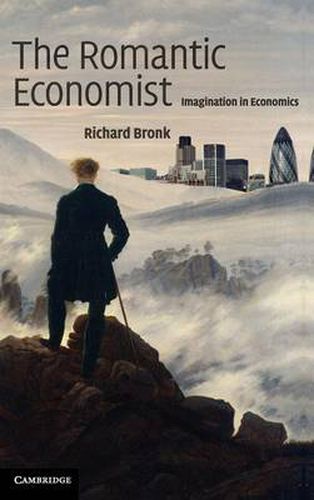
Since economies are dynamic processes driven by creativity, social norms, and emotions as well as rational calculation, why do economists largely study them using static equilibrium models and narrow rationalistic assumptions? Economic activity is as much a function of imagination and social sentiments as of the rational optimisation of given preferences and goods. In this book, Richard Bronk argues that economists can best model and explain these creative and social aspects of markets by using new structuring assumptions and metaphors derived from the poetry and philosophy of the Romantics. By bridging the divide between literature and science, and between Romanticism and narrow forms of Rationalism, economists can access grounding assumptions, models, and research methods suitable for comprehending the creativity and social dimensions of economic activity. This is a guide to how economists and other social scientists can broaden their analytical repertoire to encompass the vital role of sentiments, language, and imagination.
$9.00 standard shipping within Australia
FREE standard shipping within Australia for orders over $100.00
Express & International shipping calculated at checkout
Stock availability can be subject to change without notice. We recommend calling the shop or contacting our online team to check availability of low stock items. Please see our Shopping Online page for more details.
Since economies are dynamic processes driven by creativity, social norms, and emotions as well as rational calculation, why do economists largely study them using static equilibrium models and narrow rationalistic assumptions? Economic activity is as much a function of imagination and social sentiments as of the rational optimisation of given preferences and goods. In this book, Richard Bronk argues that economists can best model and explain these creative and social aspects of markets by using new structuring assumptions and metaphors derived from the poetry and philosophy of the Romantics. By bridging the divide between literature and science, and between Romanticism and narrow forms of Rationalism, economists can access grounding assumptions, models, and research methods suitable for comprehending the creativity and social dimensions of economic activity. This is a guide to how economists and other social scientists can broaden their analytical repertoire to encompass the vital role of sentiments, language, and imagination.
Search our extensive online catalogue.
