Readings Newsletter
Become a Readings Member to make your shopping experience even easier.
Sign in or sign up for free!
You’re not far away from qualifying for FREE standard shipping within Australia
You’ve qualified for FREE standard shipping within Australia
The cart is loading…


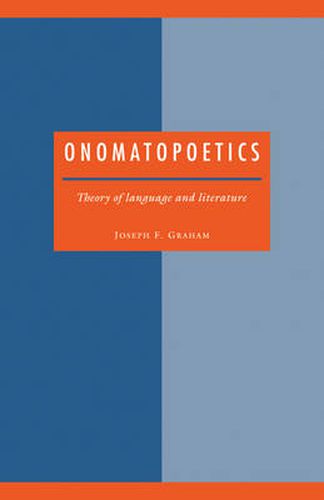
The relationship of words to the things they represent and to the mind which forms them has long been the subject of linguistic enquiry. Joseph Graham’s challenging book, first published in 1992, takes this debate into the field of literary theory, making a searching enquiry into the nature of literary representation. It reviews the arguments of Plato’s Cratylus on how words signify things, and of Chomsky’s theory of the innate ‘natural’ status of language (contrasted with Saussure’s notion of its essential arbitrariness). In the process, Graham explores the issues of meaning and intentionality in representation, and examines plausible theories of how the mind represents the world. He transcends the controversies amongst literary theorists, arguing that the solution lies not in epistemology or philosophy, but in psychology and the study of how literature teaches and why humans learn best by example.
$9.00 standard shipping within Australia
FREE standard shipping within Australia for orders over $100.00
Express & International shipping calculated at checkout
Stock availability can be subject to change without notice. We recommend calling the shop or contacting our online team to check availability of low stock items. Please see our Shopping Online page for more details.
The relationship of words to the things they represent and to the mind which forms them has long been the subject of linguistic enquiry. Joseph Graham’s challenging book, first published in 1992, takes this debate into the field of literary theory, making a searching enquiry into the nature of literary representation. It reviews the arguments of Plato’s Cratylus on how words signify things, and of Chomsky’s theory of the innate ‘natural’ status of language (contrasted with Saussure’s notion of its essential arbitrariness). In the process, Graham explores the issues of meaning and intentionality in representation, and examines plausible theories of how the mind represents the world. He transcends the controversies amongst literary theorists, arguing that the solution lies not in epistemology or philosophy, but in psychology and the study of how literature teaches and why humans learn best by example.
Search our extensive online catalogue.
