Readings Newsletter
Become a Readings Member to make your shopping experience even easier.
Sign in or sign up for free!
You’re not far away from qualifying for FREE standard shipping within Australia
You’ve qualified for FREE standard shipping within Australia
The cart is loading…


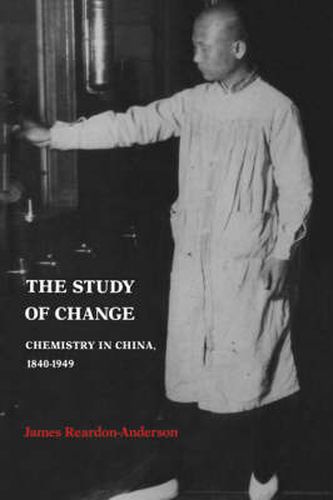
When Western missionaries introduced modern chemistry to China in the 1860s, they called this discipline hua-hsueh, literally, the study of change. In this first full-length work on science in modern China, James Reardon-Anderson describes the introduction and development of chemistry in China in the late nineteenth and early twentieth centuries, and examines the impact of the science on language reform, education, industry, research, culture, society, and politics. Throughout the book, Professor Reardon-Anderson sets the advance of chemistry in the broader context of the development of science in China and the social and political changes of this era. His thesis is that science faired well at times when a balance was struck between political authority and free social development. Based on Chinese and English sources, the narrative moves from detailed descriptions of particular chemical processes and innovations to more general discussions of intellectual and social history, and provides a fascinating account of an important episode in the intellectual history of modern China.
$9.00 standard shipping within Australia
FREE standard shipping within Australia for orders over $100.00
Express & International shipping calculated at checkout
Stock availability can be subject to change without notice. We recommend calling the shop or contacting our online team to check availability of low stock items. Please see our Shopping Online page for more details.
When Western missionaries introduced modern chemistry to China in the 1860s, they called this discipline hua-hsueh, literally, the study of change. In this first full-length work on science in modern China, James Reardon-Anderson describes the introduction and development of chemistry in China in the late nineteenth and early twentieth centuries, and examines the impact of the science on language reform, education, industry, research, culture, society, and politics. Throughout the book, Professor Reardon-Anderson sets the advance of chemistry in the broader context of the development of science in China and the social and political changes of this era. His thesis is that science faired well at times when a balance was struck between political authority and free social development. Based on Chinese and English sources, the narrative moves from detailed descriptions of particular chemical processes and innovations to more general discussions of intellectual and social history, and provides a fascinating account of an important episode in the intellectual history of modern China.
Search our extensive online catalogue.
